As heavy industries worldwide face increasingly stringent environmental regulations, the era of toxic, chrome-bearing refractories is rapidly coming to an end. In the search for sustainable and high-performance alternatives, magnesia iron spinel bricks (MgO-Fe-Al spinel bricks) have emerged as the absolute star of the “chrome-free” refractory revolution.
But exactly where are these advanced composite materials applied? While they boast excellent thermal and mechanical properties, magnesia iron spinel bricks are highly specialized.
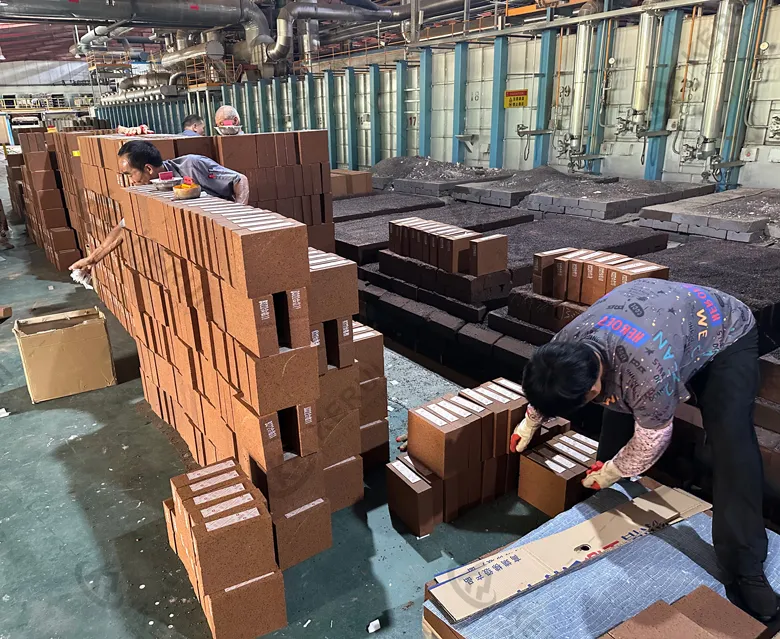

1. The Cement Industry: The Absolute Primary Market
If you ask any refractory engineer what magnesia iron spinel bricks are used for, the immediate answer will be the cement industry. This sector accounts for the vast majority of their global consumption.
The Burning Zone of Rotary Kilns
The burning zone (or firing zone) of a cement rotary kiln is an extreme environment. Temperatures regularly exceed 1400°C, and the refractory lining is subjected to intense chemical attacks from alkaline raw meal and severe mechanical stress from the rotating kiln shell. Magnesia iron spinel bricks are engineered specifically for this zone. Their primary job is to rapidly form and maintain a stable clinker coating (kiln crust) on their surface, which acts as a dynamic, self-renewing thermal shield that protects the underlying bricks from melting and abrasion.
Driving the “Chrome-Free” Revolution
Historically, magnesia-chrome bricks were the standard for the burning zone. However, under high-temperature oxidizing conditions, the trivalent chromium (Cr3+) in these bricks converts into highly toxic, water-soluble hexavalent chromium (Cr6+), posing severe environmental and health hazards. Magnesia iron spinel bricks provide the exact same—if not better—clinker coating ability and thermal shock resistance, completely eliminating the Cr6+ pollution risk.
2. Non-Ferrous Metallurgy: Emerging Applications
While the cement industry is the dominant user, the non-ferrous metallurgical sector is rapidly adopting magnesia iron spinel technology as environmental mandates tighten globally.
In the smelting of heavy non-ferrous metals such as copper, lead, and zinc, furnaces experience aggressive slag erosion and thermal cycling. Magnesia iron spinel bricks are increasingly being installed in the transition zones, upper sidewalls, and roofs of smelting furnaces (such as flash furnaces and reverberatory furnaces). They replace traditional basic bricks in areas that require high structural flexibility and resistance to thermal spalling without the environmental liabilities of chrome.
3. Lime Kilns and Auxiliary Heavy Industries
Beyond cement and non-ferrous metals, these bricks are finding highly effective applications in other heavy industrial kilns:
- Active Lime Rotary Kilns: In the high-temperature calcination zones of large-scale lime kilns, magnesia iron spinel bricks offer superior resistance to thermal fatigue and mechanical wear compared to standard high-alumina or basic bricks.
- Steel Industry (Specific Zones): While magnesia carbon bricks dominate ladles and EAFs, magnesia iron spinel is sometimes utilized in the outer safety linings or specific lower-wear zones of secondary refining vessels where a completely carbon-free and chrome-free environment is demanded.
Why Do These Industries Choose Magnesia Iron Spinel Bricks?
The widespread adoption of this material is not just about environmental compliance; it is driven by hard engineering performance metrics.
Unmatched Clinker Coating Formation
The secret lies in the iron oxide (Fe2O3) content. During operation, the iron and aluminum elements within the brick migrate to the hot face and react with the calcium oxide (CaO) in the cement raw meal. This chemical reaction forms calcium aluminoferrite, which acts as a powerful bonding agent, adhering the liquid clinker tightly to the refractory surface. A stable clinker coating drastically extends the kiln’s service life.
Superior Thermal Shock Resistance
Magnesia iron spinel bricks have a unique internal structure. The different thermal expansion coefficients of the periclase (magnesia) matrix and the spinel dispersed within it create a network of micro-cracks. Instead of being a flaw, these micro-cracks absorb and buffer the thermal stress caused by rapid temperature changes, effectively preventing the brick from experiencing catastrophic macroscopic spalling.
Excellent Structural Flexibility
Rotary kilns are massive steel tubes that bend and deform slightly (ovality) as they rotate. Rigid refractories will crush under this mechanical stress. Magnesia iron spinel bricks exhibit exceptional structural flexibility, allowing them to absorb the mechanical ovality stress of the kiln shell without cracking.
Material Upgrade: Magnesia Iron Spinel vs. Magnesia Chrome
For procurement managers considering the transition, here is a direct engineering comparison between the new chrome-free standard and the legacy material it replaces in the rotary kiln burning zone:
| Performance Metric | Magnesia Iron Spinel Bricks | Direct-Bonded Magnesia Chrome |
|---|---|---|
| Environmental Safety | 100% Eco-Friendly (No heavy metals) | Highly Toxic (Generates Cr6+) |
| Clinker Coating Ability | Excellent (Forms rapidly and adheres strongly) | Excellent |
| Thermal Shock Resistance | Exceptional (Due to micro-cracking structure) | Good |
| Kiln Shell Ovality Tolerance | High (Great structural flexibility) | Moderate |
| Service Life (Cement Kiln) | 10 to 14+ Months | 8 to 12 Months |
Partner with Kerui Refractory for Chrome-Free Solutions
The transition to chrome-free refractories is no longer just an environmental option; it is an industrial necessity. However, ensuring stable kiln operation during this transition requires premium materials manufactured with strict raw material grading and high-temperature firing protocols.
At Kerui Refractory, we are at the forefront of sustainable refractory engineering. Our magnesia iron spinel bricks are engineered to deliver superior clinker coating performance, drastically reducing your kiln’s thermal spalling risks and extending your operational campaigns.
Ready to upgrade your rotary kiln burning zone?
Contact the engineering team at Kerui Refractory today for a customized lining design, technical data sheets, and a competitive global quote.
 Whatsapp
 WeChat