In high-temperature industrial manufacturing, refractory brick failure is one of the leading causes of unplanned furnace shutdowns. When a furnace lining fails prematurely, the economic impact extends far beyond the cost of replacement materials; it results in catastrophic production losses, wasted energy, and severe safety hazards for plant personnel.
Understanding why refractory linings deteriorate is the first step toward extending their service life. This comprehensive guide explores the most common failure mechanisms—ranging from thermal shock to chemical corrosion—and outlines actionable prevention strategies to keep your operations running smoothly.
What Is Refractory Brick Failure?
Refractory failure occurs when a brick lining loses its structural integrity, insulating capability, or chemical stability before reaching its designed lifespan, forcing an emergency shutdown or immediate repair.
Difference Between Normal Wear and Premature Failure
All refractories are consumable materials. Expected service life varies by application—for instance, a cement rotary kiln lining may naturally wear down over 12 to 14 months, while a steel ladle slag line may require replacement after 80 heats. Normal wear is gradual and predictable. Premature failure, however, involves rapid, localized, and unexpected deterioration. Signs of abnormal deterioration include sudden shell hot spots, large chunks of brick falling into the melt, or rapid slag penetration.
Common Symptoms
- Cracking: Deep fissures running parallel or perpendicular to the hot face.
- Spalling: The macroscopic peeling or flaking away of the brick’s surface layer.
- Slag Penetration: Dark, dense discoloration penetrating deep into the brick’s porous matrix.
- Structural Deformation: Slumping, sagging, or warping of the furnace roof or walls.
- Excessive Wear: Accelerated thinning of the lining beyond calculated wear rates.
| Failure Type | Typical Symptoms | Main Cause |
|---|---|---|
| Thermal Shock | Cracking | Rapid temperature change |
| Slag Attack | Surface erosion | Chemical corrosion |
| Abrasion | Material loss | Mechanical wear |
| Structural Failure | Collapse | Excessive load |
Why Understanding Failure Mechanisms Matters
Refractory engineering is an exact science. Diagnosing the precise mechanism of failure impacts every facet of your operation:
- Impact on Production Efficiency: Unplanned outages halt the entire supply chain. Preventing failure guarantees higher kiln availability.
- Impact on Maintenance Costs: Emergency hot-repairs and rushed refractory orders carry massive premium costs. Predictable wear allows for optimized, scheduled maintenance.
- Impact on Equipment Safety: Refractory failure can lead to “burn-throughs,” where molten metal or 1500°C clinker makes direct contact with the steel furnace shell, risking fires and explosions.
- Impact on Refractory Service Life: Identifying the root cause allows engineers to upgrade specific furnace zones with targeted materials, drastically extending the next campaign’s lifespan.
7 Common Causes of Refractory Brick Failure
1. Thermal Shock Damage
What Is Thermal Shock? It is the internal mechanical stress generated when a refractory brick is exposed to rapid, extreme temperature fluctuations.
How Rapid Temperature Changes Cause Cracking: The hot face of the brick expands or contracts faster than the cooler interior. This creates a severe thermal gradient. Because ceramics lack tensile strength, this stress results in micro-cracks that eventually cause the brick face to spall off.
Industries Most Affected: Steel ladles (cycling from empty to 1600°C molten steel), electric arc furnaces (EAF), and cement kilns (due to unstable raw meal feeding).
Warning Signs: Clean, blocky chunks of brick fracturing off the hot face without signs of chemical melting.
Prevention Methods:
- Establish and strictly adhere to proper heating schedules (heat-up curves) to evaporate residual moisture slowly.
- Select bricks with higher thermal shock resistance (TSR), such as magnesia carbon bricks or spinel bricks with a micro-cracking structure.
- Implement controlled cooling procedures during furnace shutdowns.
2. Slag Penetration and Chemical Attack
How Molten Slag Damages Refractories: At high temperatures, low-viscosity liquid slag penetrates the open pores of the brick via capillary action. It chemically dissolves the brick’s bonding matrix (fluxing) and causes structural spalling when the slag-soaked layer cools and shrinks at a different rate than the virgin brick.
Acidic vs Basic Slag Corrosion: Mixing acidic slag with basic bricks (or vice versa) accelerates dissolution. A basic steel slag will rapidly consume an acidic silica brick.
Common Failure Locations: Ladle slag lines, EAF sidewalls, and the burning zone of cement kilns.
Prevention Methods:
- Match brick chemistry to the process conditions (The Basicity Rule).
- Use magnesia carbon bricks in basic environments; the carbon is non-wetting and physically repels liquid slag.
- Practice regular slag management (e.g., controlling slag chemistry and utilizing slag splashing techniques).
3. Mechanical Wear and Abrasion
Sources of Mechanical Damage: Physical impact and continuous friction are massive threats. This includes material movement, the constant grinding of clinker flow in rotary kilns, heavy scrap charging dropping into EAFs, and the impact loading of molten metal being poured.
Typical Symptoms: Smooth, scoured surfaces where the hot face has been physically eroded away.
Prevention Methods:
- Deploy higher abrasion-resistant materials (such as high alumina bricks, silicon carbide bricks, or anti-stripping grades) in high-friction zones.
- Ensure proper lining design using thicker safety linings in impact areas.
- Implement optimized operating practices, such as reducing scrap drop heights.
4. Improper Refractory Brick Selection
Choosing the Wrong Brick Type: Selecting a brick based solely on its theoretical melting point while ignoring the actual operating environment guarantees failure.
Common Selection Mistakes: Using rigid, dense bricks in areas requiring thermal flexibility, or using carbon-bonded bricks in highly oxidizing atmospheres where the carbon will quickly burn away.
Prevention Methods: Work with refractory engineers to carefully evaluate the operating temperature (both continuous and peak), the chemical atmosphere (oxidizing vs. reducing), and the frequency of thermal cycling.
5. Poor Installation Practices
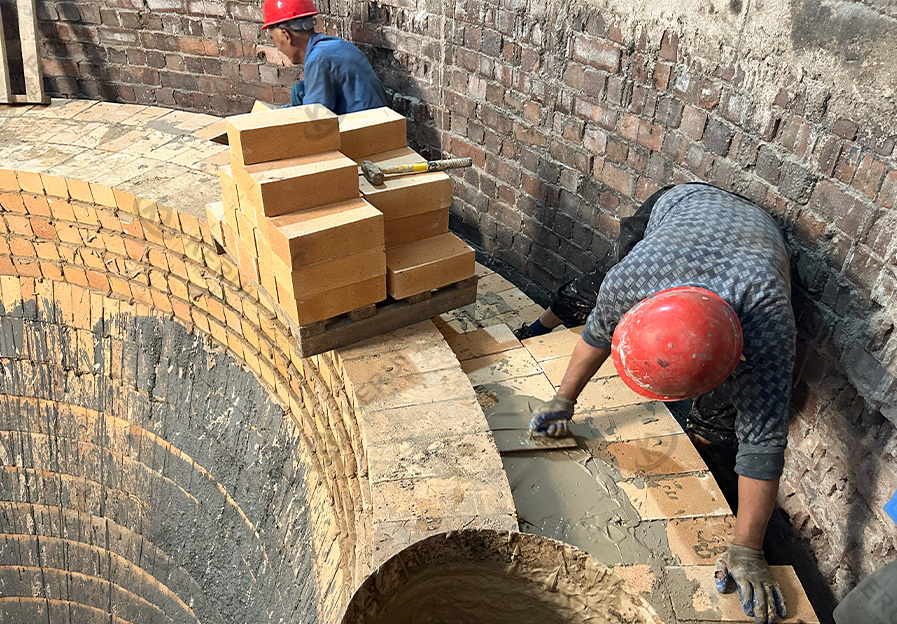
Consequences of Installation Errors: Even the world’s best brick will fail if installed incorrectly. Improper joint design or incorrect mortar application leaves thick, weak joints that act as highways for molten slag penetration. Furthermore, inadequate expansion gaps mean the bricks will crush each other as they expand during heat-up.
Prevention Methods:
- Strictly follow manufacturer installation guidelines and masonry blueprints.
- Employ skilled refractory installation teams familiar with your specific furnace type.
- Conduct rigorous quality inspections during construction to ensure tight mortar joints (typically 1-2mm).
6. Structural Overloading and Excessive Stress
Refractoriness Under Load (RUL): This parameter measures a brick’s ability to withstand deformation when subjected to both extreme heat and heavy physical weight.
Causes of Structural Failure: High-temperature creep occurs when the internal glass phases of the brick soften, causing the brick to slowly compress and collapse under the weight of the furnace structure.
High-Stress Furnace Zones: Massive glass furnace crowns (roofs) and the lower courses of tall blast furnace stoves.
Prevention Methods: Select materials with high RUL and high raw material purity. Ensure proper furnace steelwork design to distribute load evenly, and conduct routine inspections for sagging.
7. Alkali Attack and Chemical Infiltration
Common Sources of Alkali: Potassium and sodium vapors are highly reactive.
Applications: In cement kilns, alkalis from raw materials and alternative fuels infiltrate the bricks and form expansive minerals, causing the brick face to burst. In glass furnaces, alkali vapor carryover destroys regenerator checkers.
Prevention Methods: Utilize alkali-resistant refractories (such as specialized fire clay or high-purity magnesia) that form protective glazes, and maintain improved process control to limit alkali inputs.
Refractory Failure by Industry
Steel Industry
- Common Failure Mechanisms: Severe basic slag attack, extreme thermal shock from batch processing, and mechanical impact from scrap.
- Recommended Brick Types: Magnesia Carbon Bricks for working linings and Magnesia Bricks for permanent linings.
Cement Industry
- Common Failure Mechanisms: Alkali attack, mechanical ovality stress, clinker abrasion, and thermal cycling due to unstable clinker coating.
- Recommended Brick Types: Premium High Alumina Bricks and eco-friendly Spinel Bricks (Magnesia Iron Spinel for the burning zone).
Glass Industry
- Common Failure Mechanisms: Acidic chemical corrosion from glass melts and high-temperature creep in the furnace roof.
- Recommended Brick Types: Ultra-dense Silica Bricks for the crown and AZS Bricks (Alumina-Zirconia-Silica) for the melting tank.
Kerui Field Experience: Reducing Premature Refractory Failure in a Cement Kiln
Project Background: A large 5,000 T/D cement plant was experiencing chronic premature failure in their rotary kiln’s burning zone. The direct-bonded magnesia-chrome lining was failing every 6 months.
Failure Diagnosis & Root Cause Analysis: Kerui engineers conducted a site audit. We discovered that the use of high-sulfur alternative fuels was causing severe alkali and sulfate infiltration. Furthermore, frequent kiln stops were causing thermal shock, which repeatedly stripped the protective clinker coating away. The rigid chrome bricks simply could not absorb the resulting thermal and mechanical stress.
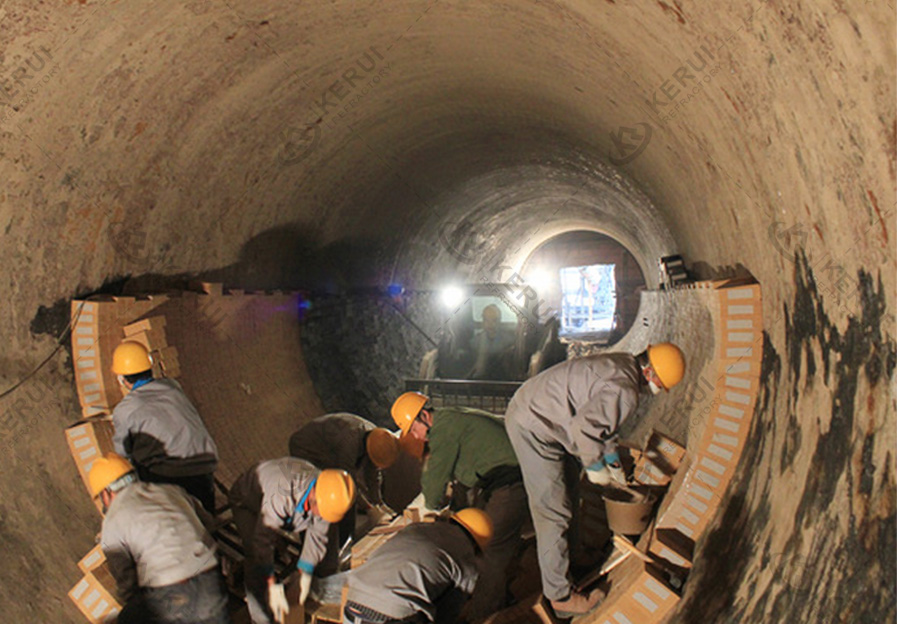
Corrective Actions: We replaced the entire burning zone lining with Kerui Magnesia Iron Spinel Bricks. The iron oxide dynamically reacted with the clinker to rapidly rebuild a stable coating, while the flexible micro-cracking structure of the spinel matrix absorbed the thermal shock.
Final Results:
- Service life improvement: Extended the continuous campaign from 6 months to 14 months.
- Reduced maintenance frequency: Eliminated three emergency hot-repairs.
- Lower operating costs: Saved the plant hundreds of thousands of dollars in replacement materials and lost production.
Warning Signs That Refractory Bricks Need Replacement
Do not wait for a complete burn-through. Schedule maintenance if you observe:
- Visible Cracking: Deep, widening fissures that threaten structural collapse.
- Severe Spalling: Large sections of the hot face falling away, exposing the cooler interior.
- Hot Spots on Furnace Shell: Detected via thermal imaging, indicating the lining has thinned dangerously.
- Excessive Lining Wear: When the remaining brick thickness falls below 30-40% of its original dimension.
- Structural Deformation: Bulging steel shells or sagging brick arches.
Refractory Failure Prevention Checklist
| Inspection Item | Recommended Frequency |
|---|---|
| Visual Inspection (Inside Furnace if possible) | Weekly |
| Temperature Monitoring (Infrared Shell Scanning) | Daily |
| Slag Condition & Chemistry Check | Per Operation Cycle / Daily |
| Lining Thickness Measurement (Laser profiling) | Monthly |
| Full Refractory Engineering Audit | Annually |
Frequently Asked Questions
What is the most common cause of refractory brick failure?
While it varies by industry, chemical attack (slag penetration) and thermal shock (spalling due to rapid temperature changes) are the two leading causes of premature refractory failure worldwide.
How long should refractory bricks last?
Service life is highly application-dependent. A cement kiln lining should last 10 to 14 months, while a high-wear steel ladle slag line may only last a few weeks (60 to 120 heats). The goal is to make wear predictable rather than premature.
Can thermal shock be prevented?
It cannot be eliminated entirely, but it can be heavily mitigated by following strict heat-up curves, avoiding sudden empty-furnace cooling, and selecting bricks engineered with high Thermal Shock Resistance (TSR).
Which refractory bricks resist slag attack best?
For basic slag (steelmaking), Magnesia Carbon bricks are best because the carbon repels the liquid slag. For acidic environments (glassmaking), ultra-dense Silica bricks or AZS blocks are highly resistant.
How do I know when a refractory lining should be replaced?
Replace linings during scheduled maintenance when thermal imaging detects dangerous hot spots on the steel shell, or when physical measurements indicate the remaining brick thickness has reached your plant’s minimum safety threshold.
What is the difference between wear and failure?
Wear is the normal, gradual, and predictable thinning of the brick over time due to operational friction and heat. Failure is an abrupt, localized breakdown (like deep cracking or massive spalling) that forces an unplanned shutdown.
Conclusion
Refractory failure is rarely caused by a single, isolated issue; it is usually the result of multiple interacting factors, including severe thermal shock, aggressive chemical attack, and mechanical overloading. Understanding these failure mechanisms is the only way to move from a reactive maintenance strategy to a proactive one.
Proper material selection, precise installation masonry, and diligent operational maintenance are the ultimate keys to maximizing lining life. By analyzing your furnace’s unique wear patterns and partnering with experienced refractory engineers, you can drastically reduce unplanned downtime, enhance site safety, and significantly lower your total operating costs.
Experiencing premature lining failure? Contact the engineering team at Kerui Refractory for a comprehensive site audit and a customized refractory solution.
 Whatsapp
 WeChat