In high-temperature industrial manufacturing, thermal efficiency is just as critical as structural integrity. Insulation bricks are the unsung heroes of industrial furnaces, working silently behind the dense working linings to trap heat, reduce energy consumption, and protect the outer steel shell.
However, selecting the right insulation refractory is not as simple as buying the cheapest option. Different furnace zones dictate specific requirements for porosity, thermal conductivity, and chemical resistance. This guide breaks down the main types of insulation bricks, their core applications, and how to make the best procurement decision for your facility.
What Are Insulation Bricks?
Insulation bricks (also known as insulating fire bricks or IFB) are a specialized category of refractory materials engineered with a highly porous structure. Unlike dense refractory bricks designed to withstand severe mechanical wear and liquid slag, insulation bricks are designed primarily for thermal management. They are characterized by their low bulk density and low thermal conductivity, enabling them to effectively block heat transfer and keep thermal energy trapped within the furnace.
Why Insulation Bricks Matter
Investing in high-quality insulation bricks directly impacts a factory’s bottom line and operational safety:
- Energy Efficiency: By significantly reducing heat loss through the furnace walls, they improve overall energy utilization, slashing fuel (gas, coal, or electricity) costs.
- Faster Heating and Cooling: Their low heat storage capacity means the furnace can heat up to operational temperatures faster and cool down quicker during maintenance cycles.
- Equipment Protection: They lower the cold-face temperature of the furnace, preventing the outer steel shell from warping or melting under extreme internal heat.
- Thermal Shock Resistance: Premium insulation bricks possess excellent volume stability and can withstand high-temperature environments without shrinking or cracking.
5 Main Types of Insulation Bricks: An Engineering Deep Dive
To make a technically sound procurement decision, you must understand the physical and chemical limitations of each insulation material. Here is an in-depth breakdown of the five primary types of insulation bricks, their temperature thresholds, and specific engineering applications.
1. Fire Clay Insulation Brick
Fire clay insulation bricks are the undisputed workhorses of the refractory industry. Made primarily from local fireclay and lightweight aggregates (like sawdust or polystyrene beads that burn away during firing to create pores), they provide highly cost-effective thermal management.
- Alumina (Al2O3) Content: Typically 30% to 45%.
- Maximum Service Temperature: 1,200°C to 1,300°C.
- Key Characteristics: They offer reliable thermal insulation and decent resistance to weak acidic environments. However, they experience significant volume shrinkage if pushed beyond their temperature limits.
- Design Limitation: They cannot directly contact open flames or molten materials.
- Primary Applications: Universally used as the safety lining (backing lining) behind dense refractory bricks in blast furnaces, hot blast stoves, cement rotary kilns, and glass melting tanks.
2. High Alumina Insulation Brick
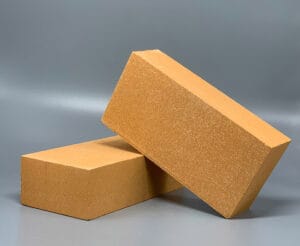
When the furnace shell requires a backing lining that must endure temperatures slightly too high for standard fire clay, engineers upgrade to high alumina insulation bricks. They are manufactured using high-grade bauxite.
- Alumina (Al2O3) Content: Ranging from 48% up to 80%.
- Maximum Service Temperature: 1,350°C to 1,500°C.
- Key Characteristics: Compared to fire clay, they possess higher refractoriness, better structural crushing strength, and lower creep rates at high temperatures.
- Design Limitation: Like fire clay, they are generally restricted to backing linings and should not be used as the hot-face (working lining) in heavy erosion zones.
- Primary Applications: Safety linings in ceramic tunnel kilns, carbon baking furnaces, and heavy-duty petrochemical heating equipment.
3. Mullite Insulation Brick (JM Series)
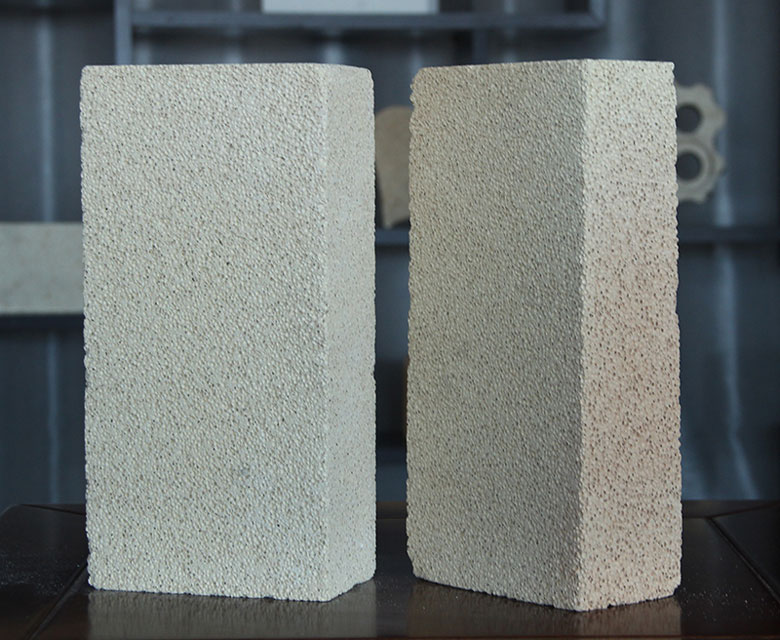
Mullite insulation bricks represent a massive technological leap. Synthesized from high-purity alumina and silica, these bricks form a stable mullite crystalline phase (3Al2O3·2SiO2). They are globally categorized by the “JM” series (e.g., JM23, JM26, JM28, JM30), corresponding to their temperature grades.
- Maximum Service Temperature: 1,350°C (JM23) up to 1,650°C (JM30).
- Key Characteristics: They boast extremely low levels of impurities (such as iron oxide and alkali metals), which translates to phenomenal structural stability and thermal shock resistance.
- Game-Changing Advantage: Unlike clay or standard high alumina, mullite insulation bricks can directly contact open flames.
- Primary Applications: The absolute standard for the hot-face working lining in clean-energy kilns, shuttle kilns, cracking furnaces, and the regenerator roofs of glass furnaces.
4. Silica Insulation Brick
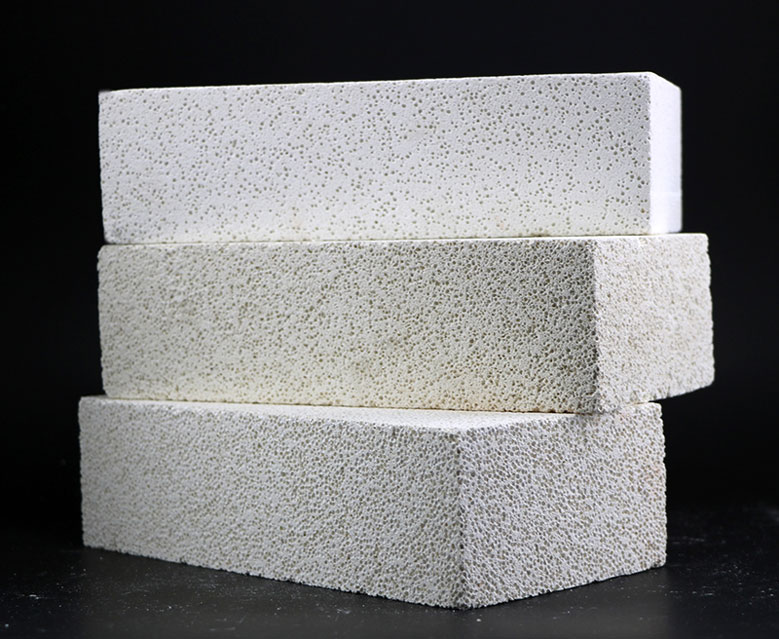
Silica insulation bricks are highly specialized acidic refractories containing over 91% silicon dioxide (SiO2). Their manufacturing process involves carefully controlling the phase transformation of quartz.
- Maximum Service Temperature: 1,500°C to 1,550°C.
- Key Characteristics: Their defining superpower is their Refractoriness Under Load (RUL). While other insulation bricks might soften under pressure at peak heat, silica bricks maintain their volume and actually expand slightly, ensuring tight masonry joints. They are also virtually immune to acidic vapor attacks.
- Design Limitation: They have extremely poor thermal shock resistance below 600°C. They must be heated up and cooled down very slowly.
- Primary Applications: Exclusively engineered for the roofs (crowns) of glass melting furnaces and the structural walls of metallurgical coke ovens.
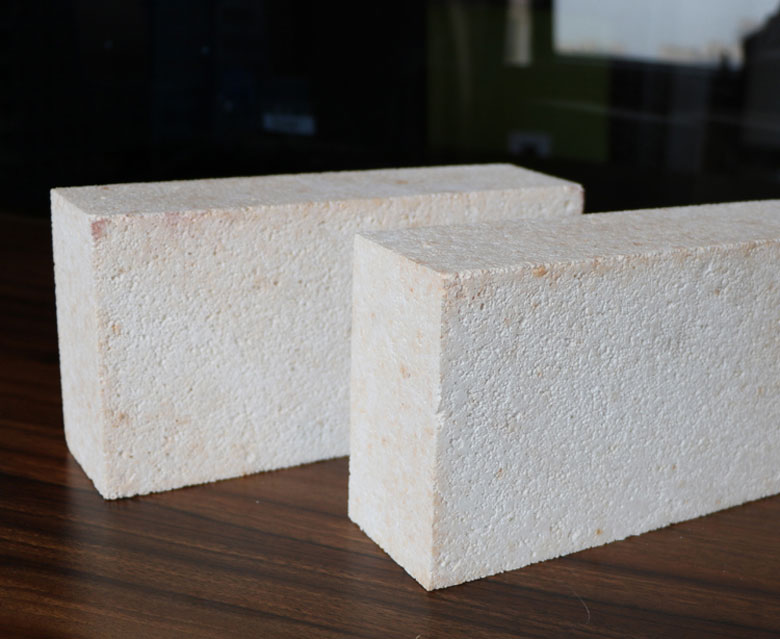
5. Alumina Bubble Brick
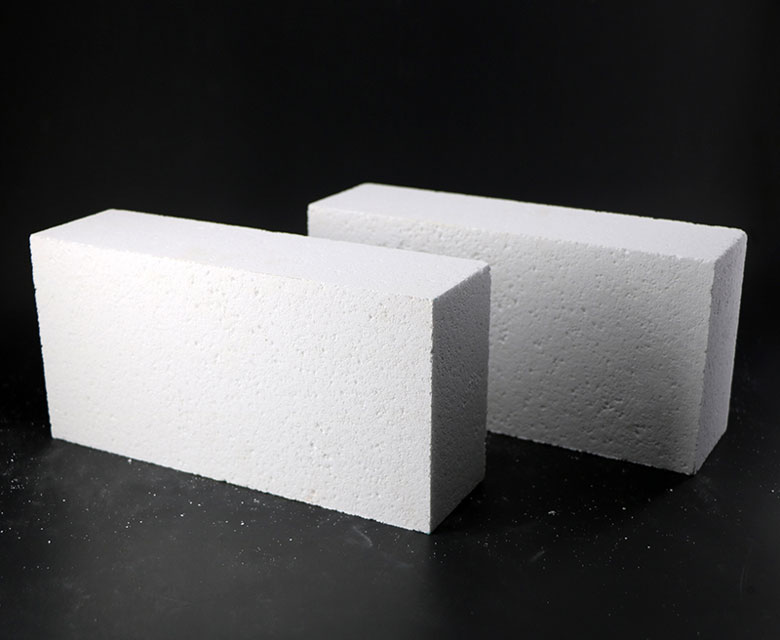
Alumina bubble bricks are the absolute pinnacle of ultra-high-temperature insulation technology. Instead of using burn-out materials to create pores, they are constructed using microscopic, hollow spheres of pure alumina (alumina bubbles) bonded together.
- Alumina (Al2O3) Content: > 98% (Ultra-high purity).
- Maximum Service Temperature: 1,750°C to 1,800°C.
- Key Characteristics: They combine seemingly contradictory properties: massive physical strength, ultra-low bulk density, and the ability to insulate at temperatures that would melt almost any other material.
- Game-Changing Advantage: They can safely contact flames and aggressive atmospheres at 1800°C without shrinking.
- Primary Applications: The go-to working lining for severe, extreme-temperature environments such as petrochemical gasifiers, molybdenum/tungsten wire furnaces, quartz glass melting kilns, and aerospace materials testing furnaces.
Insulation Brick Comparison Table
To help you quickly compare the core attributes of these materials, here is an at-a-glance reference matrix:
| Brick Type | Direct Flame Contact? | Core Advantage | Price Level |
|---|---|---|---|
| Fire Clay | No | Most cost-effective, good acid resistance. | Lowest |
| High Alumina | No | Higher temperature threshold than clay. | Low-Medium |
| Mullite | Yes | High flexibility, resists acid/alkali, flame-resistant. | Medium-High |
| Silica | No | High load-bearing capacity, acid vapor resistant. | Medium |
| Alumina Bubble | Yes | Ultra-high temperature stability, lowest density. | Highest |
Applications of Insulation Bricks
Insulation bricks are typically zoned according to the specific industry’s thermal profile:
- Cement Industry: Used in the transition zones and preheaters of rotary kilns to prevent heat loss and protect the kiln shell.
- Steel & Metallurgy: Essential for the safety linings of steel ladles, blast furnaces, and hot blast stoves to maximize heat retention.
- Glass Industry: Silica insulation bricks protect the melting tank roof, while mullite bricks are utilized in the regenerator chambers.
- Petrochemical Industry: Alumina bubble bricks are deployed in cracking furnaces and gasifiers where both extreme heat and insulation are demanded.
How to Choose the Best Suitable Insulation Bricks?
Insulation bricks have an excellent thermal insulation effect that can keep the heat to improve energy utilization. They all have low thermal conductivity that can reduce the heat transfer to enhance heat utilization. They also have good thermal shock resistance that can resist the high-temperature and high-pressure situations. This feature is conducive to keeping the volume of the high-temperature equipment. However, different insulation bricks are suitable for different industrial equipment.
High Alumina Insulation Brick
High alumina insulation bricks can not used for industrial equipment that needs direct contact with flame or to resist chemical erosion. High alumina insulation bricks are used for the linings of high-temperature equipment, including ceramic tunnel kilns, hot-air stoves, coke kilns, and so on.
Fire Clay Insulation Brick
Fire clay insulation brick can resist the acid solution erosion. It also cannot directly contact flame. Fire clay insulation bricks can be widely used in many industrial high-temperature equipment, including blast furnaces, hot blast stoves, cement kilns, glass kilns, and so on.
Mullite Insulation Brick
Mullite insulation brick has lots of pores on the surface. So it has great insulation ability. Besides, mullite insulation brick can resist the acid and alkaline erode situation. So it can used for glass furnace regenerator chambers, ceramic sintering kilns, and other high-temperature kiln linings. It is also used for the top of hot blast kilns, and so on.
Silica Insulation Brick
Silica insulation brick is an acid insulation brick. It can resist acid chemical gas erosion. The surface of silica bricks has a lot of pores. These pores decrease the weight of the bricks. So silica insulation bricks are lighter than other insulation bricks. Silica insulation brick is mainly used in the insulation layer of blast parts of hot blast stoves, rolling furnace tops, natural gas pipelines, and so on.
Alumina Bubble Brick
Alumina bubble bricks have excellent insulation ability. The bulk density and the thermal conductivity are low. These features make the alumina bubble bricks sustain the temperature of industrial equipment. Alumina insulation brick is usually used for the linings of ceramic kilns, cracking furnaces, glass kilns, refuse incinerators, and other high-temperature industrial equipment.
Factors Affecting Insulation Brick Prices
The price of insulation bricks directly correlates with the purity of the raw materials and the complexity of the manufacturing process.
Ranked from the lowest to highest price, the scale generally follows:
Fire Clay → High Alumina → Silica → Mullite → Alumina Bubble.
Working directly with a manufacturer rather than a trading company is the most effective way to secure lower prices while maintaining quality control.
FAQ
Can insulation bricks be used as the main working lining?
Generally, no. Most insulation bricks (like fire clay and high alumina) are porous and lack the mechanical strength to resist physical abrasion or liquid slag. However, specific premium types like Mullite and Alumina Bubble can be used as working linings in clean-energy, gas-fired kilns.
What is the standard size of an insulation brick?
The industry standard dimension is 230 × 114 × 65 mm.
How do insulation bricks save money?
By trapping heat inside the furnace, they drastically reduce the amount of fuel required to maintain operating temperatures, providing a continuous return on investment.
High-quality Insulation Bricks
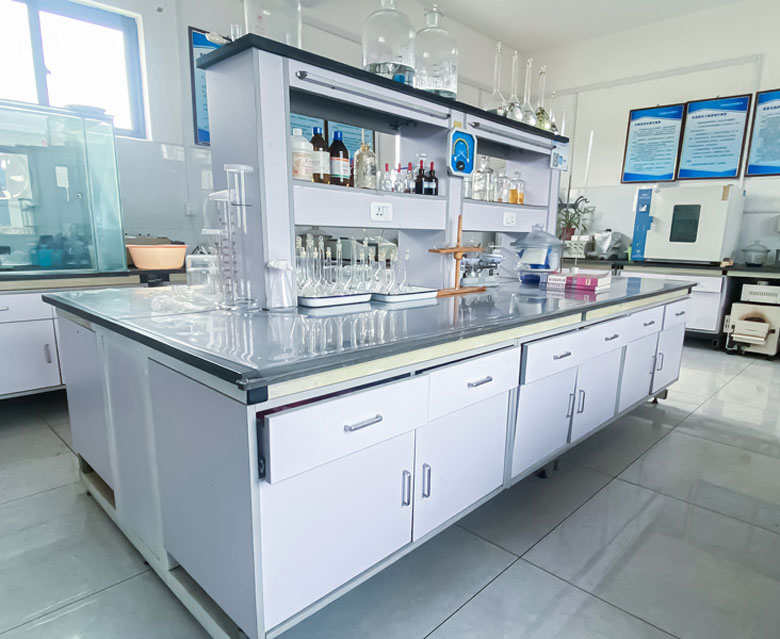
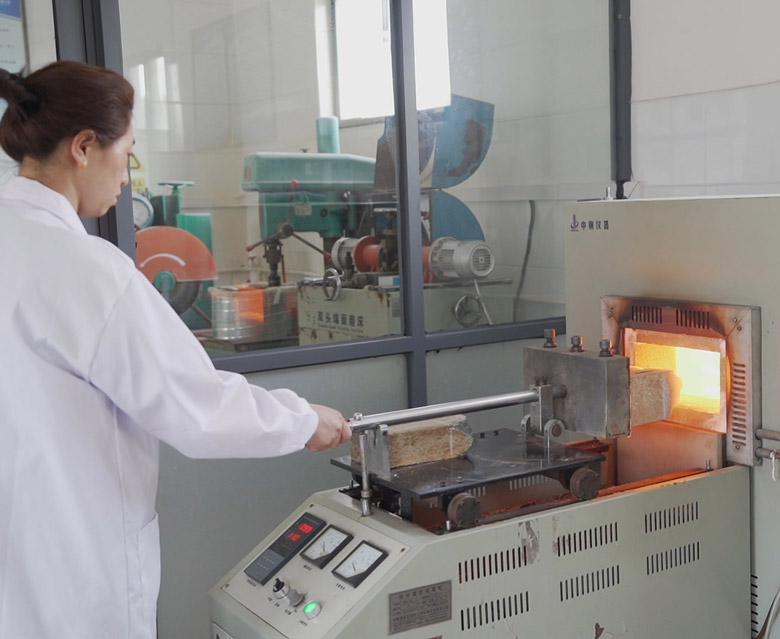
Choosing a high-quality insulation brick is very important. The high-quality insulation bricks help to sustain the stability of the industrial equipment. When using the inferior insulation brick in high-temperature equipment, it may decrease the energy utilized even have an accident.
Kerui will provide high-quality insulation bricks to every customer. Our refractory materials all passed the certification of international institutions, including ISO, SGS, and so on.
Supplier of Insulation Bricks
Choosing a good supplier also helps to find the best insulation bricks. Kerui sells five common insulation bricks on our website. You can directly contact us on our website. There are no businessmen between Kerui and customers. Besides, If you need any suggestions, Kerui has a professional technology team to offer all the details about insulation bricks. Many customers found the most suitable refractory materials by our guidance. As a professional supplier, we have abundant export experience, and our refractory products have been exported to more than 50 countries.
Conclusion
Although the fire clay insulation brick is the cheapest, it does not mean that it is not the best insulation brick for you. You should choose a suitable brick for your high-temperature equipment. The most suitable brick is the best.
 Whatsapp
 WeChat