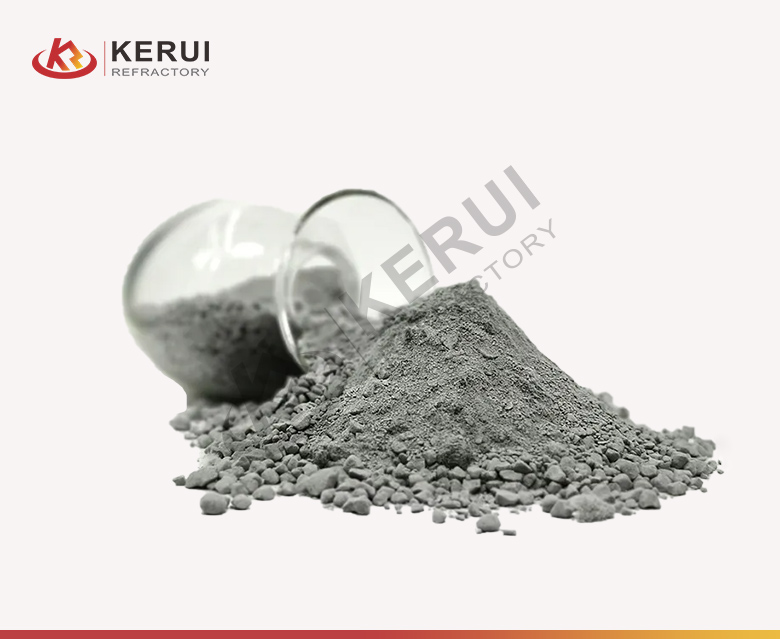
Unlike standard Portland cement used in civil construction, castable refractory cement is a highly engineered ceramic mixture designed to withstand extreme thermal, chemical, and mechanical stresses inside industrial kilns. However, the performance of this material is entirely dependent on how it is prepared on-site.
Even a 1% deviation in water addition, an extended mixing time, or sloppy pouring practices can result in disastrous consequences—ranging from severe porosity and strength loss to catastrophic steam explosions during the furnace heat-up.
To protect your industrial kiln investment, this guide provides a definitive, step-by-step Standard Operating Procedure (SOP) for mixing, pouring, and vibrating castable refractories, ensuring a robust and long-lasting monolithic lining.
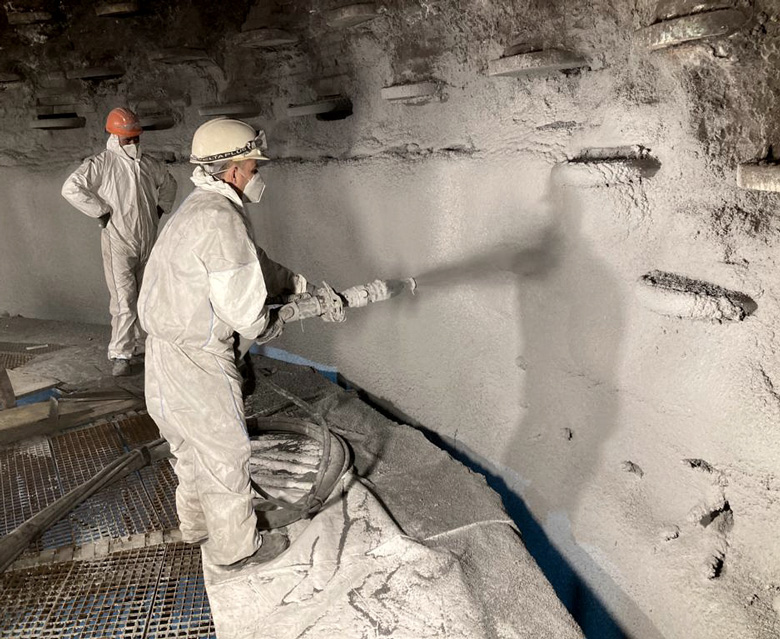
Essential Preparation Before Mixing
Do not rush into tearing open the bags. Monolithic refractory failure often begins before the water even hits the dry mix. Ensure these three conditions are met before starting:
1. Proper Equipment (Mixer & Vibrator)
You must use a forced-action pan mixer (paddle mixer). Never use a standard gravity drum mixer (a common cement mixer), as it cannot generate the intense shear forces required to break up ultrafine refractory powders and binders. Ensure you have a high-frequency internal poker vibrator ready for the pouring phase.
2. Environmental Temperature Control
Temperature control is critical to the setting time of the cement. The ambient working environment, the dry castable material, and the mixing water should all be maintained between 10°C and 30°C (50°F – 86°F). Extreme cold severely retards the setting time, while excess heat causes flash setting (hardening prematurely). Use only clean, potable water (drinking water quality) to avoid chemical contamination.
3. Absolute Cleanliness
Thoroughly clean the pan mixer, wheelbarrows, buckets, and shovels. Any residual Portland cement, dirt, or old refractory material from previous jobs will chemically contaminate the new batch, radically altering its setting behavior and destroying its high-temperature strength.
4-Step Mixing SOP for Castable Refractory Cement
Follow this exact chronological sequence to achieve a perfectly homogeneous mix without comprising the binder’s integrity.
Step 1: Dry Mixing
Empty the dry castable refractory cement bags into the pan mixer. Run the mixer dry for 1 to 2 minutes. During transport and warehouse storage, the heavy aggregates tend to settle at the bottom of the bag while the fine powders rise to the top. Dry mixing re-homogenizes the material, ensuring an even distribution of particles.
Step 2: Precision Water Addition (“Less is More”)
The greatest enemy of refractory castables is excess water. Check the manufacturer’s Technical Data Sheet (TDS) for the exact water percentage (typically 6% to 10% for conventional castables, and as low as 4% for low-cement castables). Measure the water precisely by weight or volume. With the mixer running, slowly add 70% to 80% of the total required water.
Step 3: Wet Mixing Time
Gradually add the remaining 20% to 30% of the water until the desired consistency is reached. The total wet mixing time must be strictly limited to 3 to 5 minutes. Over-mixing generates frictional heat inside the pan, which can cause the castable to flash-set inside the mixer, rendering the entire batch useless.
Step 4: The “Ball-in-Hand” Test
To verify if the consistency is correct before pouring, use the industry-standard “Ball-in-Hand” test. Take a handful of the wet mix, form it into a compact ball, and toss it about 20 cm (8 inches) into the air, catching it in your palm.
- Too Dry: The ball crumbles and breaks apart upon impact. (Add a tiny fraction of water).
- Too Wet: The ball flattens into a messy pancake and slumps through your fingers. (The batch is ruined; do not add dry material to fix it).
- Perfect: The ball retains its spherical shape with only slight flattening at the bottom, showing a slight sheen of moisture on the surface.
How to Pour and Vibrate the Castable Properly
Once the material is mixed, the chemical clock is ticking. You typically have a working time (pot life) of 20 to 30 minutes to place the material into the framework.
Pouring the Mix
Transport the wet castable quickly to the installation site. Pour it evenly and continuously into the prepared molds or anchor framework. Avoid dropping the material from heights greater than 1 meter (3 feet); excessive drop heights cause the heavy aggregates to separate from the fine powder binder.
Vibrating (Air Removal)
Insert the high-frequency internal vibrator vertically into the poured castable. The intense vibration liquefies the mix temporarily, forcing trapped air bubbles to rise to the surface. Move the vibrator slowly at regular intervals to ensure a highly dense, compact lining.
⚠️ CRITICAL WARNING: Do Not Over-Vibrate
Once air bubbles stop surfacing and a wet sheen appears on top, slowly withdraw the vibrator. Over-vibration is highly destructive. It causes the heavy structural aggregates to sink to the bottom while the fine powders and water (laitance) float to the top. This results in severe material segregation, leaving you with a weak, dusty hot face that will easily erode under furnace conditions.
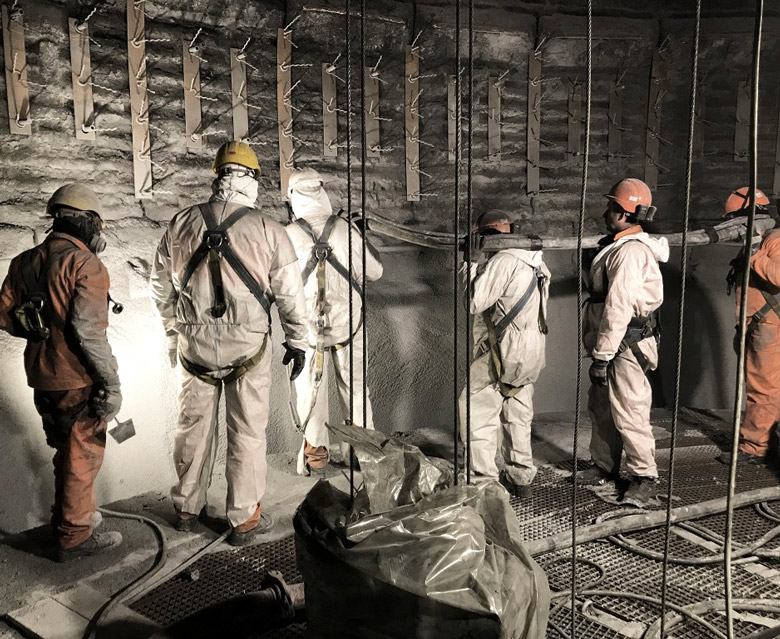
The Most Critical Phase: Curing and Bake-Out
A perfectly mixed batch of castable refractory cement can still be completely destroyed if the water is not managed correctly after pouring. This process is divided into two strict phases: room-temperature curing and high-temperature bake-out.
Stage 1: Room Temperature Curing
Once the material has been poured and vibrated, it must be left undisturbed in the molds at room temperature (15°C to 25°C) for a minimum of 24 to 48 hours. During this time, the cement undergoes a crucial chemical hydration reaction (forming a hydraulic bond), which gives the lining its initial “green strength.” The surface should be covered with plastic sheeting or damp sacks to prevent premature moisture loss, which leads to surface cracking.
Stage 2: The Bake-Out Schedule (Dry-Out)
This is the leading cause of monolithic refractory failure. Never fire a newly cast lining directly to operating temperatures! The immense volume of chemical and mechanical water trapped inside the cement will instantly turn to steam. Because the steam cannot escape the dense matrix fast enough, the internal pressure will literally blow the refractory wall apart in a violent “steam explosion.”
You must follow a highly controlled, step-by-step heating curve (Bake-Out Schedule):
- 110°C (230°F) Hold: The temperature is raised slowly (typically 15°C – 25°C per hour) and held at 110°C for several hours. This allows the “free water” (unbound moisture) to safely evaporate.
- 350°C (660°F) Hold: The temperature is raised again and held at 350°C. This critical hold allows the chemically bound “crystal water” within the calcium aluminate cement to be released safely without destroying the bonds.
- Final Ramp: Only after these holds can the furnace be safely ramped up to its normal operating temperature to achieve the final “ceramic bond.”
Troubleshooting: Common Mixing Mistakes to Avoid
To help your installation team avoid costly errors, we have compiled the most frequent mistakes made when working with refractory castables and their inevitable consequences.
| Critical Mistake | The Consequence | How to Prevent It |
|---|---|---|
| Adding Extra Water (To make it “flow better”) | Increases porosity. When water evaporates, it leaves voids. Compressive strength can drop by over 50%. | Strictly weigh the water based on the manufacturer’s Technical Data Sheet (TDS). Do not eyeball it. |
| Mixing with Portland Cement | Portland cement cannot withstand extreme heat. The lining will melt, flux, and collapse. | Thoroughly clean all mixers and wheelbarrows before use. Ensure zero cross-contamination. |
| Skipping the Bake-Out Schedule | Trapped moisture turns to high-pressure steam, causing catastrophic explosions and deep spalling. | Use programmable temperature controllers and strictly follow the supplier’s heating curve. |
| Over-Vibrating the Wet Mix | Heavy aggregates sink to the bottom, fine powders float to the top. Causes a weak, dusty hot face. | Withdraw the vibrator slowly as soon as air bubbles stop surfacing and a wet sheen appears. |
Kerui Field Case Study: Repairing an EAF Roof
To illustrate the financial impact of proper mixing, consider a recent rescue project by Kerui Refractory for a steel plant operating a 50-ton Electric Arc Furnace (EAF).
The Problem: The plant’s internal maintenance team was replacing the EAF roof castable every 20 days. An audit revealed they were treating the castable refractory cement like standard concrete—adding roughly 15% water to make it flow easily out of the mixer without using a vibrator.
The Kerui Solution: We supplied a premium Low-Cement Castable (LCC) and dispatched a site engineer to supervise the installation. We restricted the water addition to a strict 6.5%, enforced the use of forced-action pan mixers, applied proper high-frequency vibration, and executed a 72-hour controlled bake-out curve.
The Result: The new EAF roof lining achieved a service life of 65 days (a 325% increase). By simply following the correct mixing and curing SOP, the plant saved hundreds of thousands of dollars in material replacement and unplanned downtime.
Frequently Asked Questions (FAQ)
1. How long is the pot life (working time) of castable refractory cement?
Typically, you have 20 to 30 minutes from the moment water touches the dry mix to pour and vibrate it into place. In hotter climates, this time will be even shorter. Never add more water to “re-temper” a batch that has started to harden; throw it away.
2. Why is my refractory castable crumbling after curing?
This usually points to three issues: 1) Too much water was used during mixing, 2) The ambient temperature was too cold (below 5°C), halting the chemical bonding process, or 3) The cement binder in the bags had expired or absorbed moisture during warehouse storage.
3. Can I mix refractory cement by hand with a shovel?
For patching a small, non-critical domestic fireplace, perhaps. However, for industrial kiln applications, absolutely not. Hand mixing cannot generate the shear force required to properly disperse the ultra-fine binders and additives, resulting in a weak, inconsistent lining.
4. Does castable refractory cement shrink when heated?
Yes. During the first heat-up, as the chemical water is driven out and the materials sinter, the castable will undergo a Permanent Linear Change (PLC)—typically shrinking by 0.2% to 0.5%. This is why proper expansion joints must be engineered into the formwork before pouring.
Maximize Your Furnace Lining Lifespan
A monolithic lining is 30% material quality and 70% installation execution. Even the highest-grade castable refractory cement will fail if the water ratio, mixing time, or bake-out curve is incorrect.
Don’t leave your next refractory installation to chance. Contact the engineering experts at Kerui Refractory. We supply premium custom castables, detailed Technical Data Sheets (TDS), customized bake-out curves, and offer on-site supervision to guarantee your lining performs flawlessly.
 Whatsapp
 WeChat