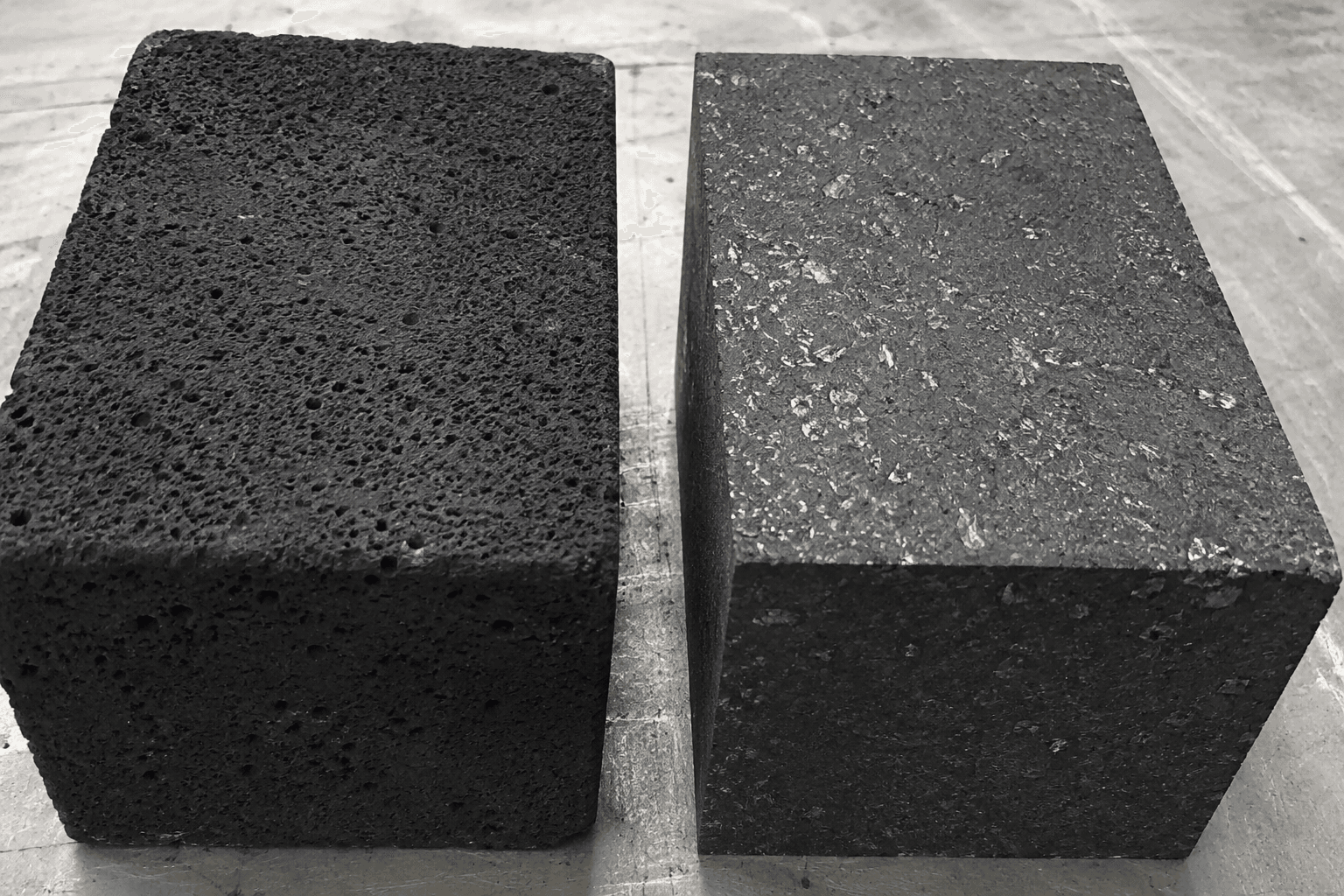
The Quick Answer for Purchasers: Carbon bricks are pure carbon materials engineered for extreme thermal conductivity in Blast Furnace hearths (reducing atmospheres). Magnesia-Carbon (MgO-C) bricks are composite materials utilizing magnesia to resist highly basic slags, making them the industry standard for steelmaking ladles, EAFs, and BOFs.
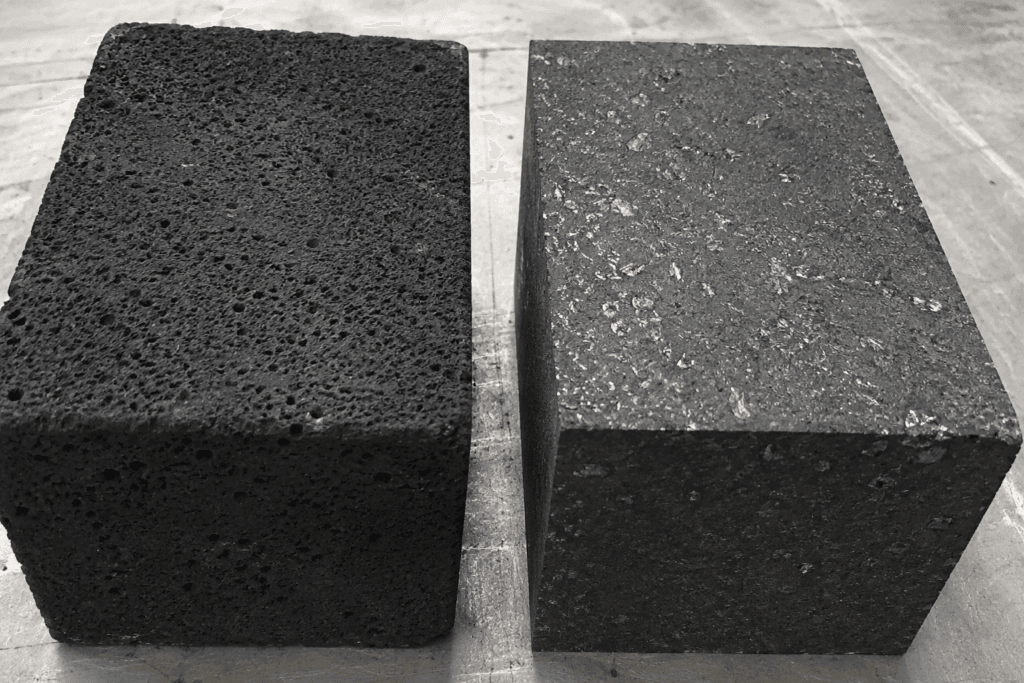
On a metallurgical purchasing order, “Carbon Bricks” and “Magnesia-Carbon Bricks” might look like simple variations of the same product. However, making a substitution between the two is an engineering impossibility. Installing the wrong brick in the wrong furnace zone will lead directly to catastrophic lining failure, burn-throughs, or severe molten metal contamination.
While both materials rely on the incredible high-temperature properties of carbon, they serve two entirely different industries: Ironmaking and Steelmaking. In this engineering guide, we will break down the exact differences in their chemical composition, technical specifications, and provide a definitive procurement decision framework.
Composition and Manufacturing of Carbon Bricks
A pure Carbon Brick is exactly what it sounds like: a refractory block made almost entirely of carbonaceous materials. It is manufactured by mixing calcined anthracite, metallurgical coke, and artificial graphite, using coal tar pitch as a binder, and then roasting the block at extreme temperatures in a non-oxidizing kiln.
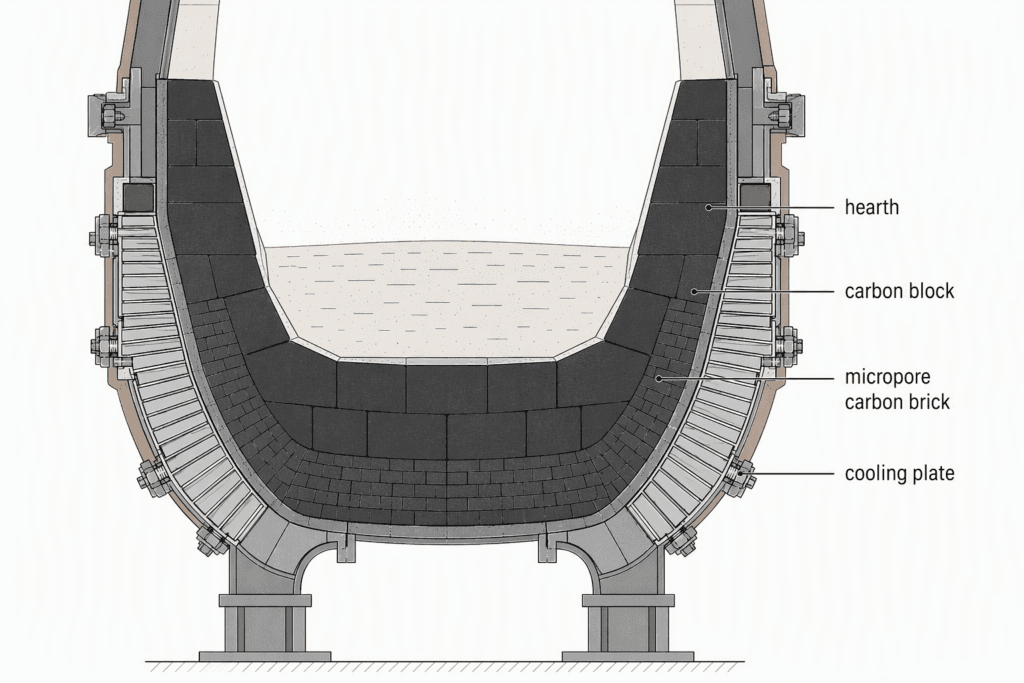
Key Engineering Properties
- Extreme Thermal Conductivity: This is the primary superpower of a carbon brick. In a blast furnace, it rapidly conducts intense internal heat outward to the cooling staves. This aggressive cooling freezes a protective layer of slag and iron (called a “skull”) directly onto the hot face of the brick, protecting the hearth from melting.
- Immune to Slag Wetting: Pure carbon cannot be “wetted” by molten iron or most industrial slags. Because the liquid metal cannot stick to or penetrate the carbon matrix, the bricks act as a perfect, impenetrable barrier.
Composition and Performance of Magnesia Carbon Bricks (MgO-C)
A Magnesia-Carbon Brick is a highly engineered composite refractory material. It is primarily composed of high-purity fused magnesia (MgO, roughly 70-85%) and flake graphite (10-20%), bound together by phenolic resin. Unlike carbon bricks, it is an “unburned” brick, meaning it cures via chemical resins rather than kiln firing.
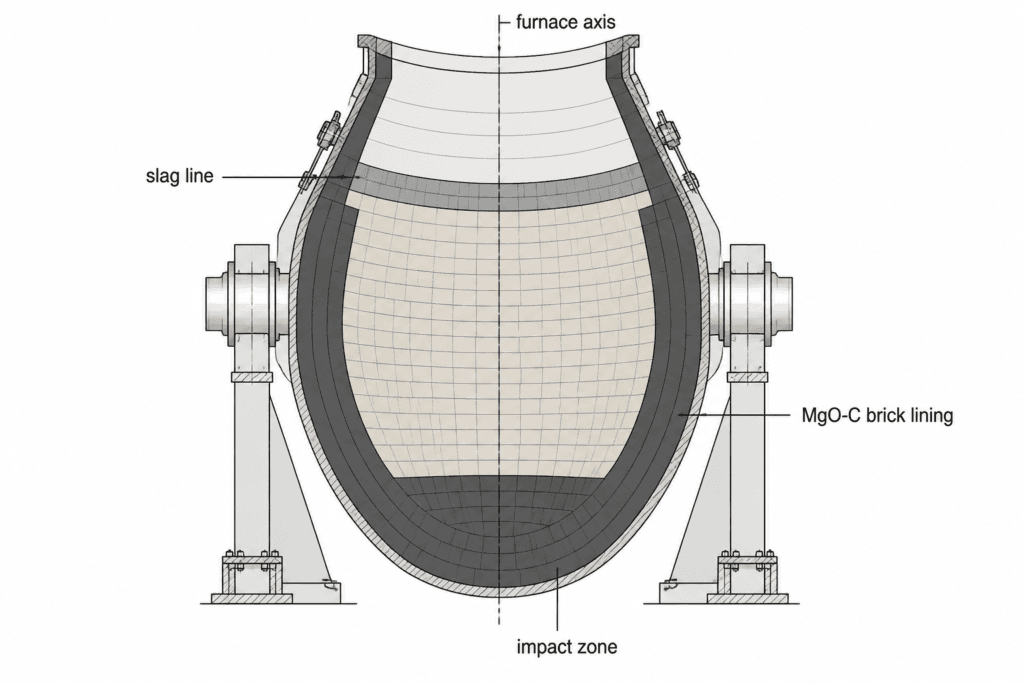
Key Engineering Properties
- Supreme Basic Slag Resistance: Magnesia is one of the most powerful basic refractory materials on earth. When combined with the non-wetting properties of flake graphite, MgO-C bricks perfectly resist the highly corrosive, high-calcium, and high-iron basic slags generated during steel refining.
- Exceptional Thermal Shock Resistance: Pure magnesia bricks are notoriously brittle. The addition of flake graphite creates a flexible, highly conductive matrix that absorbs thermal stress, preventing the brick from shattering when cold scrap metal is dropped into the hot furnace.
Technical Performance Parameters (Data Comparison)
To assist plant engineers and procurement teams in refractory selection, below is the standard structural and thermal data comparison between the two materials:
| Physical Property | Standard Carbon Brick | Magnesia-Carbon (MgO-C) Brick |
|---|---|---|
| Primary Raw Materials | Anthracite, Met Coke, Graphite | Fused Magnesia (MgO) + Flake Graphite |
| Bulk Density (g/cm³) | 1.55 – 1.90 | 2.90 – 3.10 |
| Apparent Porosity (%) | 12% – 18% (Standard) < 10% for Microporous | 3% – 8% |
| Cold Crushing Strength (CCS) | 25 – 45 MPa | 35 – 60 MPa |
| Thermal Conductivity | Very High (15-40 W/m·K) | Moderate to High (5-15 W/m·K) |
| Atmosphere Requirement | Strictly Reducing (No Oxygen) | Tolerates Steelmaking Conditions |
| Slag Resistance Profile | Neutral (Non-wetting) | Highly Basic |
How to Choose: Procurement & Engineering Decision Guide
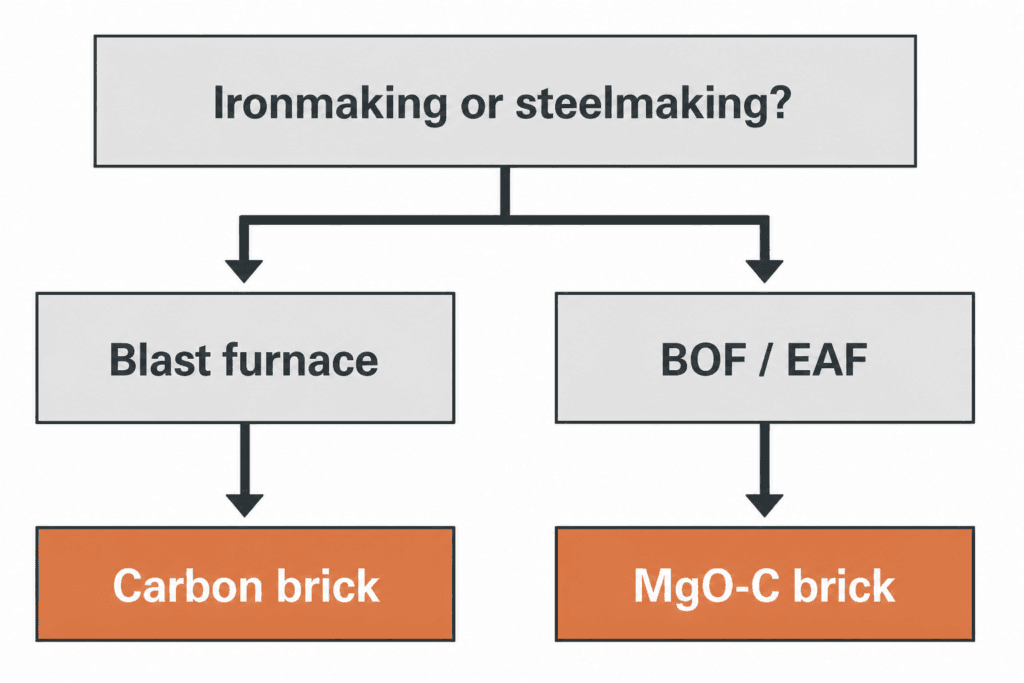
Selecting the wrong material will result in immediate lining failure. Use these strict engineering guidelines to make your purchasing decision:
Choose Carbon Bricks If:
- You are relining a Blast Furnace hearth or bottom (Ironmaking).
- Your furnace operates strictly in a reducing atmosphere.
- You are building Aluminum Reduction Cells (Cathode blocks).
- You require maximum thermal conductivity to build a protective “skull” via water-cooled staves.
Choose Magnesia-Carbon Bricks If:
- You are maintaining the slag line of a Steel Ladle (Steelmaking).
- You are relining a Basic Oxygen Furnace (BOF) or Electric Arc Furnace (EAF).
- The refractory will be exposed to highly basic, corrosive steel slags.
- You need high thermal shock resistance to withstand the dumping of cold steel scrap.
Real-World Engineering Case Studies
Case Study 1: Blast Furnace Hearth Relining (Ironmaking)
The Challenge: A 2,500 m³ blast furnace in Southeast Asia was experiencing premature hearth erosion due to alkali vapor penetration and molten iron infiltration, reducing the campaign life to just 8 years.
The Solution: The engineering team upgraded the traditional carbon blocks to high-grade Microporous Carbon Bricks. By adding silicon and special additives during manufacturing, the pores in the brick became microscopic (less than 1 micron).
The Result: The microporous structure physically blocked liquid iron and zinc vapors from penetrating the matrix. The blast furnace campaign life was successfully extended from 8 years to 12 years, saving millions in downtime and relining costs.
Case Study 2: Steel Ladle Slag Line Upgrade (Steelmaking)
The Challenge: A European steel plant utilizing standard Magnesia-Chrome bricks in their steel ladle slag lines was facing rapid chemical erosion (washout) and environmental compliance issues regarding hexavalent chromium.
The Solution: The plant transitioned to Magnesia-Carbon bricks (12% Carbon) with added metallic antioxidants (aluminum/magnesium powder).
The Result: The non-wetting properties of the graphite prevented the basic slag from adhering to and dissolving the magnesia. Slag-line wear rates were reduced by 30%, ladle availability increased, and the plant eliminated toxic chromium from their refractory waste.
The Shared Weakness: Oxidation Resistance
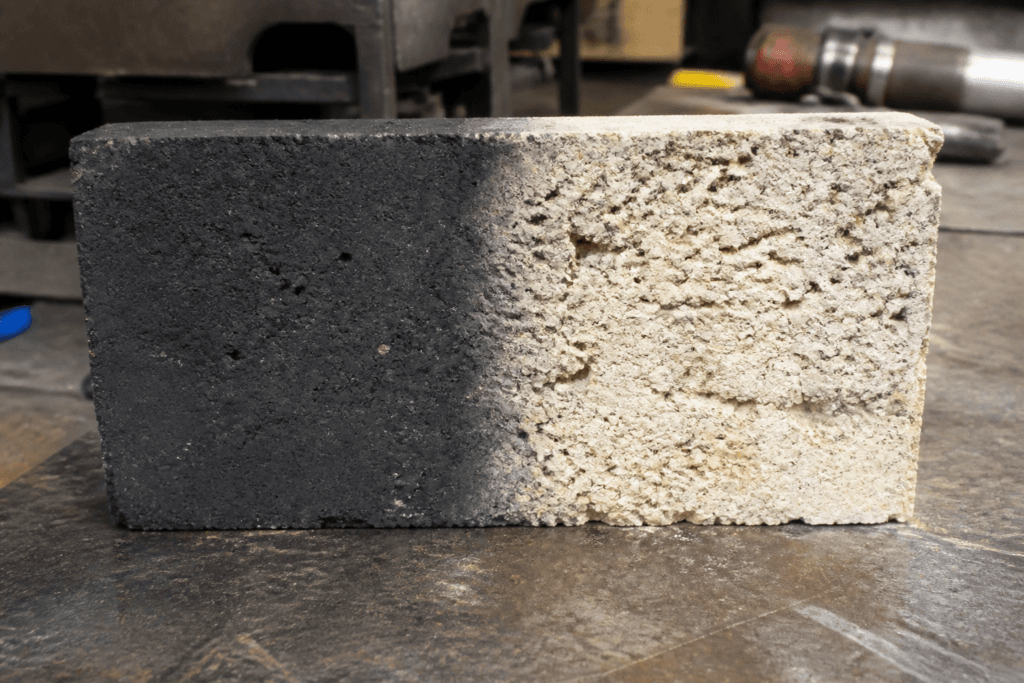
Despite their incredible high-temperature strengths, anything containing carbon shares one fatal flaw: Oxygen. In an oxidizing atmosphere above 400°C (750°F), carbon rapidly reacts with oxygen to form CO or CO₂ gas. When this happens, the carbon matrix burns away, turning the dense brick into a fragile, porous sponge.
How the Refractory Industry Solves Oxidation
Manufacturers add special metallic antioxidants (like Aluminum, Silicon, or Magnesium powder) into the resin mix of MgO-C bricks. At high temperatures, these metals react with oxygen before the graphite does. This reaction forms a protective ceramic glaze (like Spinel or Forsterite) that seals the brick’s pores, blocking further oxygen penetration.
Chief Engineer’s Recommendation on Carbon Content
When selecting Magnesia-Carbon bricks for steel ladles, do not assume “more carbon is better.” In our plant installations, we typically select 10%–14% carbon MgO-C bricks for the highly corrosive slag-line zones to maximize slag resistance. However, for the bottom impact zones, we recommend lower-carbon grades (5%–8%). High carbon in the impact zone can lead to unwanted carbon pickup in the molten steel, which can ruin ultra-low-carbon steel batches.
Frequently Asked Questions (FAQ)
Can magnesia carbon bricks be used in blast furnaces?
Generally, no. Blast furnaces operate with a reducing atmosphere and require extreme thermal conductivity to freeze the slag layer (the “skull”). Pure carbon bricks or microporous carbon blocks are required here. MgO-C bricks are designed for steelmaking and basic slag resistance, not blast furnace hearths.
Why are carbon bricks unsuitable for oxidizing atmospheres?
Carbon rapidly oxidizes at temperatures above 400°C (750°F) in the presence of oxygen, turning into gas. This literally burns the carbon matrix away, leaving the brick porous, weak, and prone to immediate mechanical failure.
Can I use Carbon Bricks in a steel refining ladle?
Absolutely not. First, the highly oxidizing environment of a steel ladle would burn the pure carbon away rapidly. Second, liquid steel aggressively absorbs carbon. Using pure carbon bricks would cause severe “Carbon Pickup,” ruining the metallurgical chemistry of your steel.
What carbon content is best for steel ladles?
It depends on the zone. Slag lines typically require 10-14% carbon for maximum corrosion resistance. Metal zone walls and impact pads usually use 5-8% carbon to maintain high strength while minimizing the risk of carbon dissolving into the steel.
Are magnesia carbon bricks environmentally safer than magnesia chrome bricks?
Yes. Magnesia-Chrome bricks, while historically popular, can form highly toxic and carcinogenic hexavalent chromium (Cr6+) after being exposed to high temperatures and basic slags. Magnesia-Carbon bricks pose no such environmental hazard and have largely replaced Chrome bricks in modern steelmaking.
How long do MgO-C bricks last in a BOF?
Depending on the steel plant’s operational practices, slag splashing techniques, and the quality of the brick, a modern Basic Oxygen Furnace lined with premium MgO-C bricks can achieve a campaign life of anywhere from 3,000 to over 10,000 heats.
Looking for Premium Metallurgical Refractories?
Whether you are designing a highly conductive cooling hearth for a Blast Furnace or upgrading the slag-line defense of your Basic Oxygen Furnace, selecting the precise chemistry is critical.
Kerui Refractory engineers custom-tailored solutions for both Ironmaking and Steelmaking. Contact our technical team today to receive a free consultation, competitive factory pricing, and exact Technical Data Sheets (TDS) for our carbon and Magnesia-Carbon series.
 Whatsapp
 WeChat