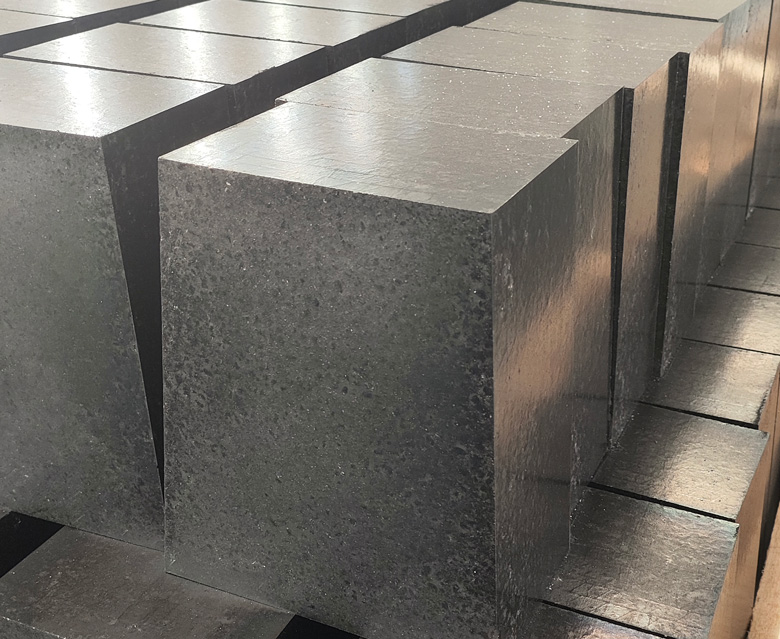
Magnesia carbon bricks represent a significant breakthrough in refractory material science. By combining the exceptional high-temperature resistance of magnesia with the structural stability of carbon, engineers have created a composite material that thrives in extreme thermal environments.
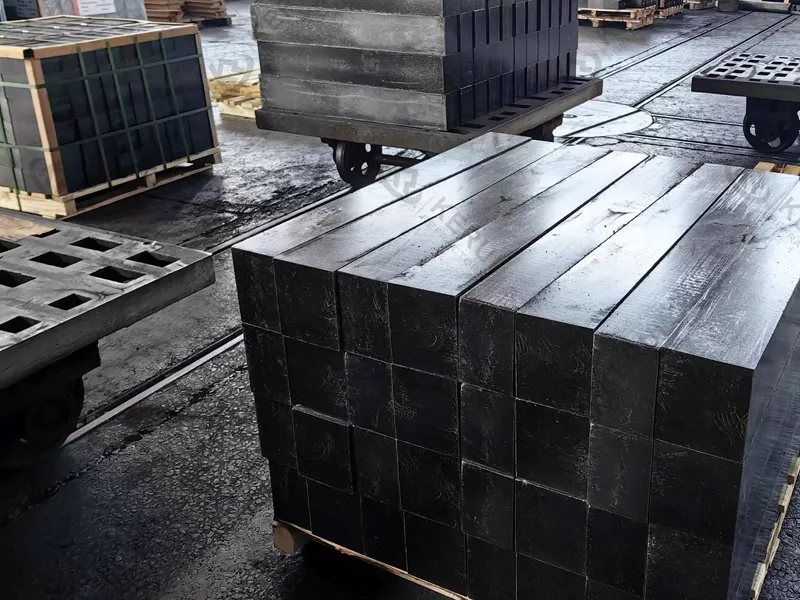
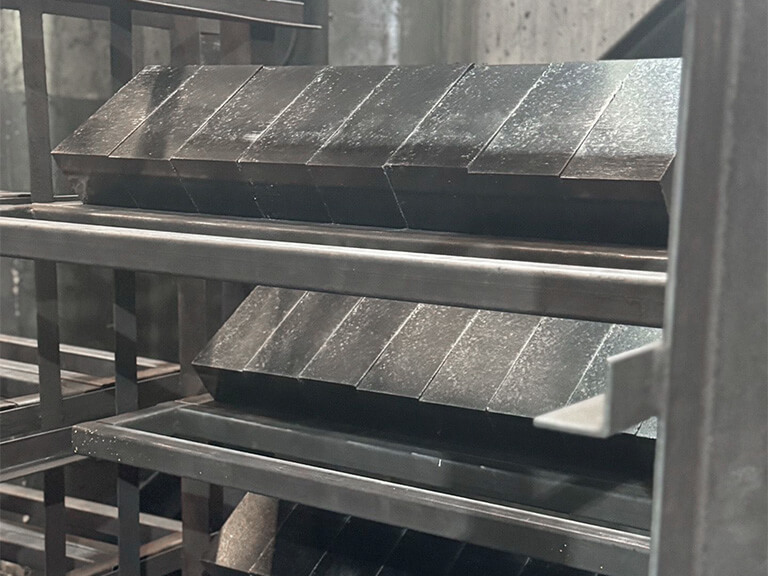
Fundamentally, magnesia carbon bricks are unburned basic refractories. They are manufactured by pressing a precise mixture of high-purity magnesia, flake graphite, and specific carbonaceous binders. Unlike traditional ceramic bricks, they do not require high-temperature firing.
Core Raw Materials and Composition
The exceptional performance of this composite material relies on the synergistic effect of its three foundational elements, along with specialized additives.
- High-Purity Magnesia:Magnesia (MgO) serves as the primary structural backbone of the brick, typically accounting for 70% to 90% of the total composition. Sourced from dead-burned magnesia or fused magnesia, this ingredient provides the fundamental refractoriness. Because magnesia has an extremely high melting point, it ensures the brick maintains its physical integrity under intense heat.
- Flake Graphite:Graphite acts as the carbon source, generally making up 5% to 20% of the brick. Flake graphite is preferred due to its complete crystalline structure. The most critical characteristic graphite brings to the composite is its non-wetting property. It physically repels external chemical attacks, preventing them from penetrating the refractory matrix.
- Carbonaceous Binders:Because water cannot be used to bind carbon and magnesia, specialized carbonaceous binders are essential. Phenolic resins or tar pitch are commonly utilized. During the curing process, these binders undergo a chemical change, leaving behind a continuous carbon network that tightly locks the magnesia particles and graphite flakes together, forming a robust structural skeleton.
- Antioxidants (Additives):The primary weakness of any carbon-based material is its tendency to oxidize at high temperatures. To counteract this, manufacturers introduce trace amounts of metallic powders, such as aluminum powder, silicon powder, or magnesium-aluminum alloys. These antioxidants react preferentially with oxygen, protecting the graphite from being consumed and preserving the brick’s structural integrity.
Key Properties of Magnesia Carbon Bricks
The marriage of magnesia and carbon results in a refractory product that exhibits several superior performance metrics compared to traditional alkaline bricks.
1. Outstanding Slag Resistance
This is arguably the most valued property of the material. The carbon network created by the flake graphite is highly resistant to wetting by molten slag. Instead of absorbing into the brick’s pores through capillary action, the slag is repelled at the surface. This dramatically slows down the rate of chemical erosion and structural wear.
2. High Thermal Shock Resistance
Rapid temperature fluctuations often cause traditional refractories to crack and spall. However, the graphite within magnesia carbon bricks boasts excellent thermal conductivity. This allows heat to be transferred quickly and evenly throughout the brick, preventing the buildup of localized thermal stress and effectively resisting thermal shock.
3. Low Thermal Expansion
While magnesia naturally expands when heated, the inclusion of carbon significantly alters the material’s overall thermal behavior. The graphite matrix buffers the volumetric changes of the magnesia particles. As a result, the brick exhibits a very low residual linear expansion, ensuring that the masonry structure remains stable and tightly sealed during high-temperature operations.
4. High-Temperature Strength
Despite being an unburned product, magnesia carbon bricks maintain remarkable structural strength at operating temperatures. The carbon bond formed by the resin binder, combined with the dense packing of magnesia aggregates, ensures excellent cold crushing strength and hot bending strength, allowing the material to withstand intense mechanical abrasion and load.
Critical Applications in Modern Steelmaking
Magnesia carbon bricks are not general-purpose refractories; they are precision-engineered for the most aggressive zones in metallurgical furnaces.
Applications in Steel Ladles
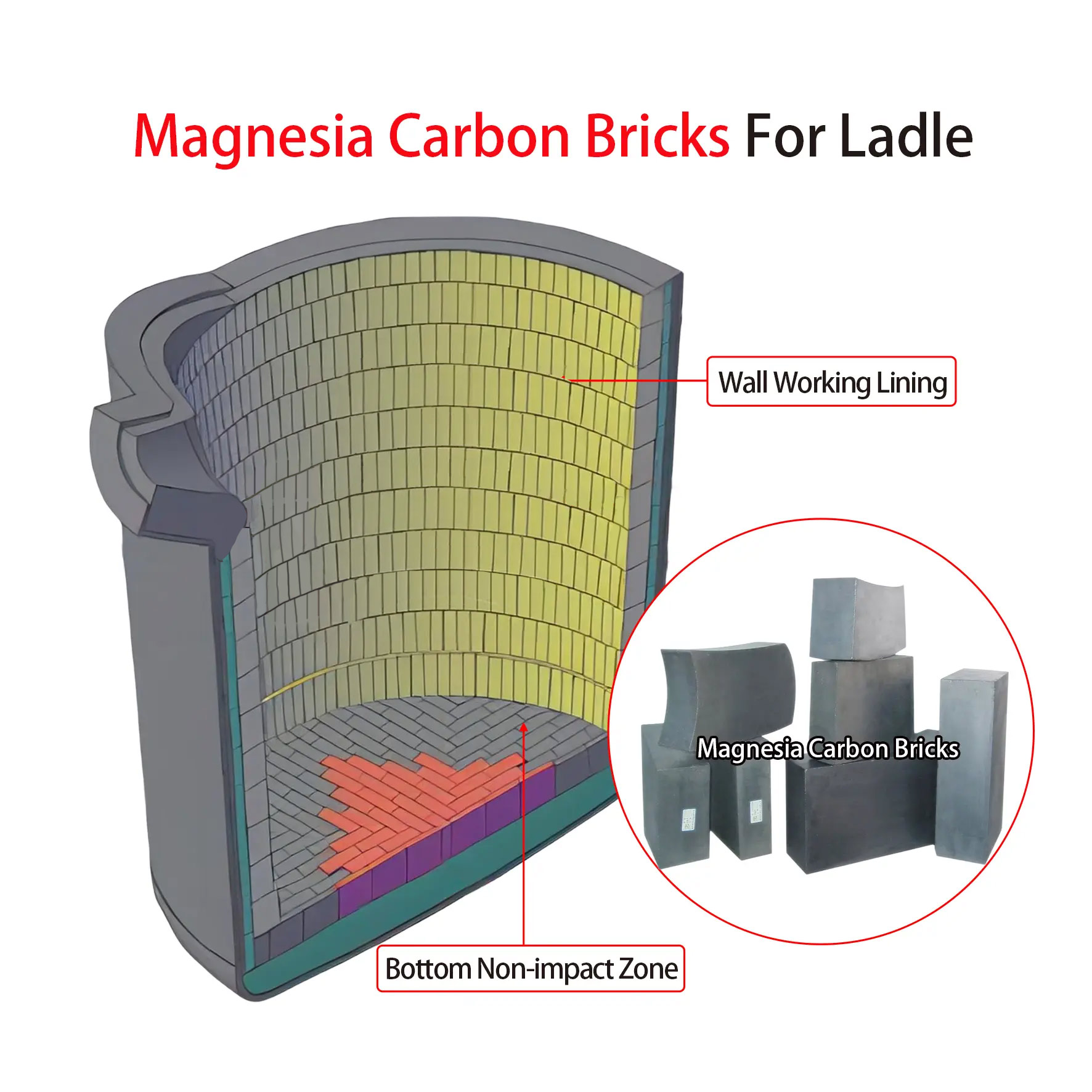
The slag line of a steel refining ladle represents one of the harshest environments in metallurgy. Here, refractories face severe chemical corrosion from highly basic basic molten slag, combined with intense thermal shock during the tapping and refining processes. MgO-C bricks are the absolute standard for ladle slag lines. The carbon matrix repels liquid slag, preventing chemical penetration, while the magnesia resists high-temperature dissolution.
Electric Arc Furnace (EAF) Linings
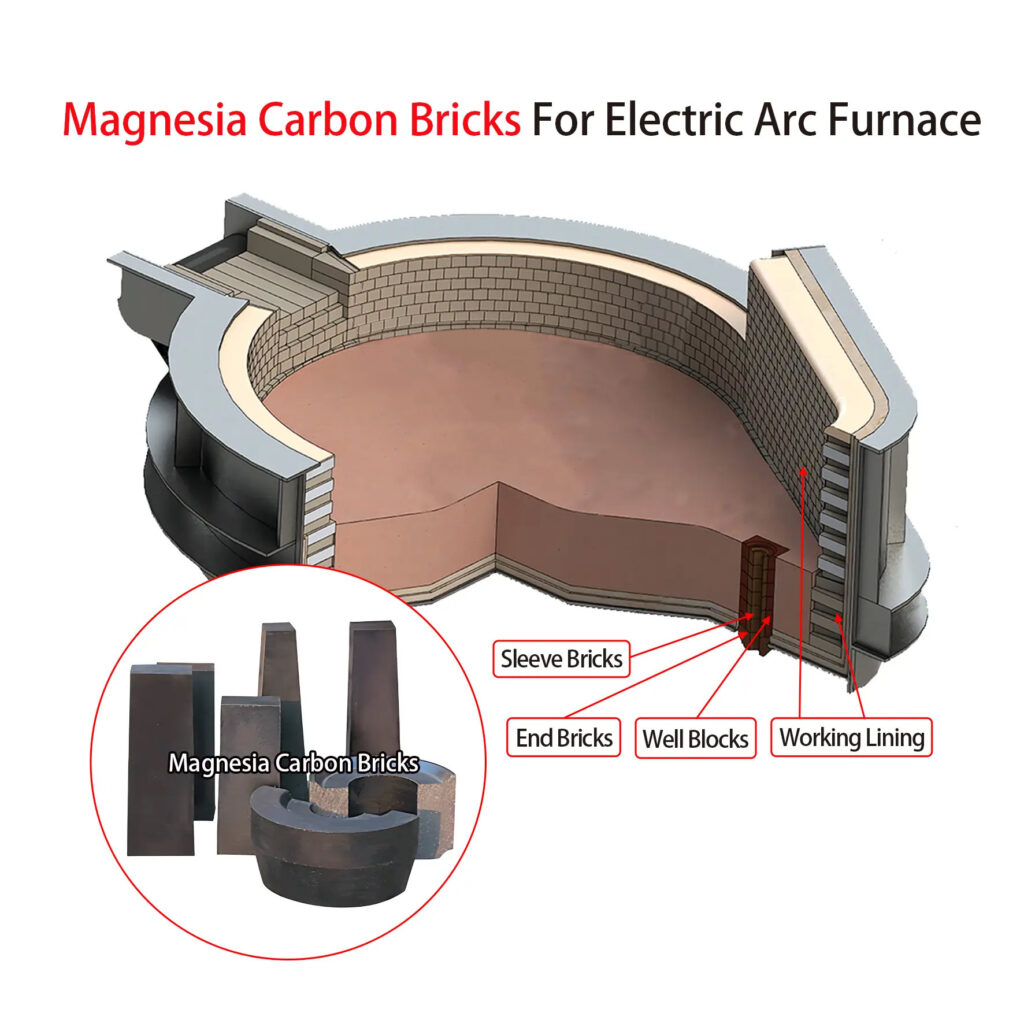
In Electric Arc Furnaces, the refractory lining is subjected to intense arc radiation, mechanical impact from scrap metal charging, and aggressive chemical attack. Magnesia carbon bricks are strategically installed in the hot spots, slag lines, and bottom tapping holes of the EAF, where traditional alkaline bricks would fail rapidly due to thermal spalling.
Magnesia Carbon Brick vs. Magnesia Chrome Brick: Detailed Comparison
For decades, magnesia chrome bricks were the industry standard. However, due to environmental regulations and the superior performance of MgO-C, a massive industry shift has occurred. Here is a comprehensive engineering breakdown of how these two basic refractories compare across critical properties:
| Property | Magnesia Carbon (MgO-C) Bricks | Magnesia Chrome (MgO-Cr) Bricks |
|---|---|---|
| Refractoriness | > 2000°C | > 2000°C |
| Cold Crushing Strength (CCS) | 30 – 50 MPa (Slightly lower due to carbon) | 40 – 80 MPa (Very high) |
| Bulk Density | 2.85 – 3.00 g/cm³ | 3.00 – 3.30 g/cm³ |
| Apparent Porosity | < 5% (Extremely dense, preventing penetration) | 12% – 18% |
| Thermal Conductivity | High (Transfers heat quickly) | Low to Moderate |
| Thermal Shock Resistance | Exceptional | Moderate |
| Slag Resistance (Basic Slag) | Excellent (Non-wetting by graphite) | Good |
| Environmental Impact | 100% Chrome-Free (Eco-friendly) | Generates toxic Hexavalent Chromium (Cr6+) |
| Typical Service Life | Longer (Specifically in steelmaking) | Moderate |
| Typical Applications | Steel ladles, EAF hot spots, BOF Converters | Cement kiln burning zones, Non-ferrous smelting |
How to Select Magnesia Carbon Bricks
Not all MgO-C bricks are created equal. The most critical factor in selection is determining the optimal Carbon Content (Graphite %) based on your specific metallurgical process.
- High Carbon Content (12% – 20%): Select these for areas suffering from severe thermal shock and heavy slag erosion, such as the EAF slag line. Higher carbon means better slag repulsion and thermal conductivity, but lower mechanical strength.
- Low Carbon Content (5% – 10%): Choose these for the ladle bottom or when smelting ultra-low carbon clean steel. Lower carbon reduces the risk of carbon pickup in the molten steel and offers higher mechanical crushing strength to withstand molten metal turbulence.
Engineer’s Tip: Always evaluate the basicity of your slag. Magnesia carbon refractories perform exceptionally well in high-basicity environments (CaO/SiO2 ratio > 2). If your process involves acidic slag, premature wear will occur regardless of the carbon content.
Failure Analysis: Why Magnesia Carbon Bricks Crack or Fail
To maximize the service life of MgO-C bricks, operators must identify and mitigate the primary causes of refractory wear on the furnace floor.
1. Oxidation of Carbon
This is the most common cause of failure. When the brick is exposed to oxygen at temperatures above 500°C, the graphite and resin binders burn away. This leaves a porous, fragile magnesia skeleton. Once the carbon is gone, the “non-wetting” property disappears, allowing molten slag to easily penetrate and dissolve the brick. Solution: Ensure the manufacturer adds high-quality antioxidants (Al, Si, or Mg-Al powder) and maintain a reducing atmosphere in the furnace when possible.
2. Thermo-Mechanical Spalling
While MgO-C has great thermal shock resistance, extreme and rapid temperature drops (e.g., leaving a red-hot ladle empty for too long) can still cause structural stress. Additionally, inadequate expansion joint calculation during installation will cause the bricks to crush each other during the heat-up phase.
3. Mechanical Erosion and Scouring
In areas like the impact zone of a ladle or the tapping hole, the sheer physical force and turbulence of the molten steel flowing at high speeds can physically wash away the refractory surface, especially if the carbon matrix has already been slightly oxidized.
Service Life of MgO-C Bricks & Optimization
What is the expected service life? In a typical BOF (Basic Oxygen Furnace), a high-quality magnesia carbon lining can achieve 3,000 to 5,000+ heats. In ladle slag lines, life spans typically range from 60 to 120 heats depending on the refining intensity (e.g., LF or VD processes).
To extend service life, operators should practice slag splashing (coating the lining with liquid slag to form a protective crust) and implement rigorous hot-repair gunning protocols for localized wear zones.
FAQ About Magnesia Carbon Bricks
1. How long do magnesia carbon bricks last?
The service life depends heavily on the application environment. In a Basic Oxygen Furnace (BOF), a high-quality lining can last anywhere from 3,000 to over 5,000 heats. In the extremely aggressive environment of a ladle slag line, typical service life ranges from 60 to 120 heats. Proper slag splashing and targeted gunning maintenance can significantly extend these figures.
2. What is the optimal carbon content of MgO-C bricks?
The carbon content usually ranges from 5% to 20%. For areas requiring extreme resistance to chemical corrosion and thermal shock (like EAF slag lines), a higher carbon content (12%-20%) is preferred. For clean steel smelting or areas needing higher mechanical strength against impact, a lower carbon content (5%-10%) is recommended to minimize carbon pickup in the molten steel.
3. Why do magnesia carbon bricks oxidize, and how can it be prevented?
At temperatures above 500°C in an oxidizing atmosphere, the flake graphite within the brick reacts with oxygen and burns away. This destroys the carbon bond, making the brick porous and vulnerable to rapid slag penetration. To prevent this, premium manufacturers like Kerui Refractory incorporate specialized antioxidants (such as metallic Al, Si, or Mg-Al alloy powders) into the mixture, which preferentially react with oxygen to protect the carbon matrix.
4. Are MgO-C bricks suitable for cement rotary kilns?
Generally, no. Cement rotary kilns operate with a highly oxidizing atmosphere that would rapidly burn out the graphite content in MgO-C bricks, leading to catastrophic structural failure. For cement kilns, chrome-free basic alternatives like magnesia spinel bricks or magnesia iron alumina spinel bricks are the standard choice.
5. What is the difference between MgO-C and dolomite bricks?
Both are highly basic refractory materials used in steelmaking, but they serve different primary purposes. Magnesia carbon (MgO-C) offers superior thermal shock and slag resistance due to its graphite content. Dolomite bricks (made of CaO and MgO) are highly valued for smelting ultra-clean steel because the free calcium oxide (CaO) can actively absorb impurities (like sulfur and non-metallic inclusions) from the molten metal. However, dolomite bricks are highly susceptible to hydration (moisture damage) during storage, requiring far stricter handling protocols than MgO-C.
Partner with Experts for Your Refractory Needs
Selecting the optimal magnesia carbon brick requires balancing carbon content, antioxidant additives, and aggregate purity against your specific operational challenges. A generic approach leads to premature failure and costly downtime.
At Kerui Refractory, our engineering team analyzes your specific slag composition, tapping temperatures, and furnace design to recommend the precise MgO-C grade for your operation. With strict quality control on raw materials and advanced cold-mixing press technology, we deliver refractories that endure.
Experiencing premature lining failure? Contact Kerui Refractory today to request a comprehensive technical consultation and a tailored quote for your next furnace relining project.
 Whatsapp
 WeChat