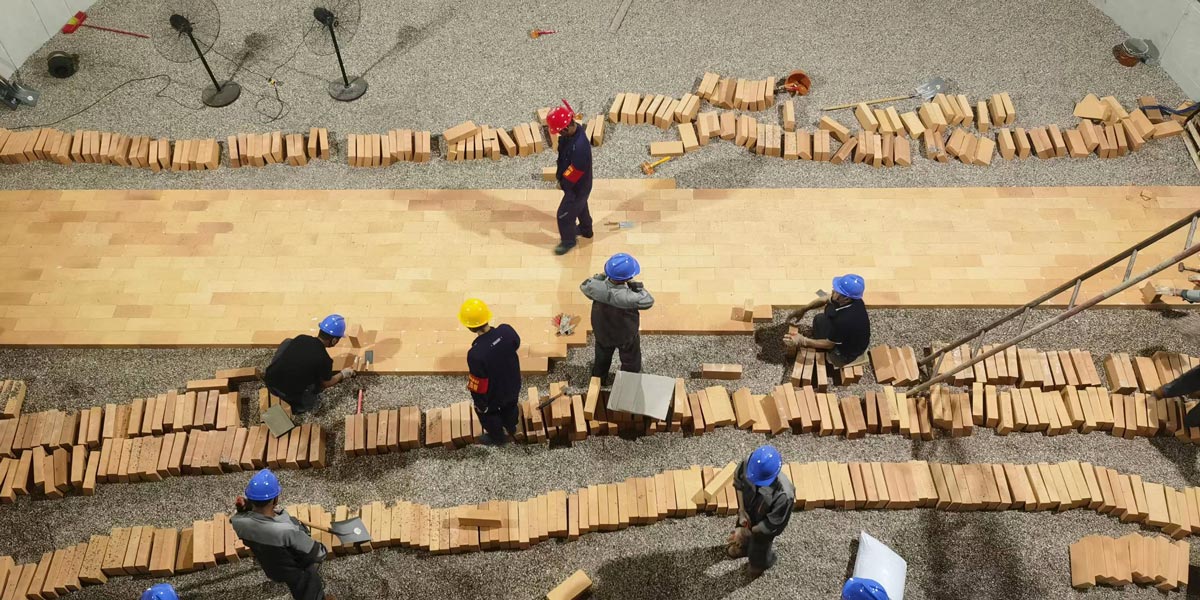
In the high-stakes world of heavy industry—spanning steelmaking, glass manufacturing, and cement production—the choice of furnace bricks is not merely a procurement detail; it is a critical engineering decision. The refractory lining of a furnace serves as the heartbeat of thermal operations. Selecting the wrong material doesn’t just lead to heat loss; it results in catastrophic structural failure, unplanned downtime, and significant financial erosion.
As we navigate the industrial demands of 2026, where energy efficiency and carbon footprint reduction are paramount, understanding the technical nuances of furnace bricks is essential. This guide provides a deep technical comparison of the three “pillars” of the refractory world: High Alumina, Magnesia, and Silica bricks, helping you match the right chemistry to your specific thermal environment.
1. The Four Gold Standards of Furnace Brick Evaluation
A high-performance furnace brick is evaluated based on four rigorous technical metrics:
- Refractoriness under Load (RUL): Unlike simple melting points, RUL measures the temperature at which a brick begins to deform under a specific pressure. For heavy-duty kilns, a high RUL is non-negotiable for structural integrity.
- Chemical Compatibility: Industrial furnaces are chemical reactors. Whether your slag is acidic (high silica) or basic (high lime), your furnace bricks must be chemically inert to that environment to prevent rapid corrosion.
- Thermal Spalling Resistance: This defines a brick’s ability to withstand “thermal shock”—the rapid expansion and contraction caused by temperature fluctuations during furnace cycling.
- Apparent Porosity & Bulk Density: A lower porosity typically indicates higher density and better resistance to molten metal penetration, though it may sacrifice some insulation value.
2. High Alumina Bricks: The Versatile Workhorse of Modern Industry
High Alumina Bricks are the most widely used refractories globally, defined by an Alumina (Al₂O₃) content ranging from 48% to over 90%.
Technical Profile
The performance of these furnace bricks is directly proportional to their Al₂O₃ content. As alumina levels rise, so do the refractoriness and mechanical strength.
- Neutral to Slightly Acidic: They offer excellent stability in neutral environments and good resistance to acidic slag.
- High Mechanical Strength: They are exceptionally durable against the physical abrasion of raw materials being charged into a furnace.
Industrial Application
- Blast Furnaces & Stoves: Used in the mid-to-upper sections where mechanical wear is high.
- Incinerators: Ideally suited for the diverse chemical environments found in waste-to-energy plants.
- Ceramic Kilns: Provide the necessary stability for long-duration firing cycles.
Expert Insight: While versatile, high alumina bricks can suffer from “creep” (slow deformation) under extreme temperatures if the impurity levels (like Fe₂O₃ or TiO₂) are too high. Always verify the chemical purity of your supplier’s raw materials.
3. Magnesia Bricks: The Guardian of Basic Environments
In industries where basic slags are prevalent—most notably in steelmaking—Magnesia Bricks (and their cousin, Magnesia-Carbon bricks) are indispensable.
Technical Profile
Composed primarily of Magnesium Oxide (MgO), these furnace bricks are the cornerstone of “basic” refractory technology.
- Superior Corrosion Resistance: They are almost immune to the corrosive effects of basic slags and iron oxide.
- High Thermal Conductivity: Magnesia bricks transfer heat efficiently, which is often a requirement for specific smelting processes.
- High Melting Point: With a melting point exceeding 2800°C in pure form, they thrive in the hottest zones of a furnace.
Industrial Application
- Steel Converters & EAF (Electric Arc Furnaces): Specifically used in the “slag line” where chemical attack is most aggressive.
- Glass Tank Regenerators: Essential for the checkwork where high heat storage capacity is needed.
- Cement Rotary Kilns: Used in the burning zone to withstand the alkaline nature of the clinker.
Critical Maintenance Note: Magnesia furnace bricks are highly susceptible to hydration. If stored in damp conditions or exposed to steam, they can crumble into powder (Mg(OH)₂). Proper storage and “dry-out” schedules are vital for their longevity.
4. Silica Bricks: The King of High-Temperature Structural Stability
While alumina and magnesia handle the “brute force” of chemical attack, Silica Bricks are the elite choice for structures requiring absolute dimensional stability at temperatures approaching 1650°C.
Technical Profile
Composed of at least 93% SiO₂ these furnace bricks are unique because of their phase-transformation characteristics.
- Superior Load-Bearing Capacity: Silica bricks maintain their rigidity almost up to their actual melting point. Unlike other materials, they do not soften gradually.
- Acid Resistance: They are highly resistant to acidic slags and dust, making them ideal for specific glass and steel applications.
- Volume Stability: Once they pass the critical expansion phase (around 600°C), they are remarkably stable.
Industrial Application
- Glass Melting Furnaces: Specifically for the Crown (Roof). The silica bricks must withstand the weight of the massive arch while being exposed to volatile alkaline gases.
- Coke Ovens: Used in the heating walls due to their high thermal conductivity and resistance to the abrasive action of moving coal/coke.
Expert Warning: The “Achilles’ heel” of silica furnace bricks is their rapid expansion between 200°C and 500°C. If a furnace is heated or cooled too quickly through this range, the bricks will crack or “spall” due to the cristobalite and quartz phase changes.
5. Technical Comparison Matrix: Selecting Your Furnace Bricks
To simplify your procurement process, here is a professional comparison of the three primary refractory types:
| Feature | High Alumina Bricks | Magnesia Bricks | Silica Bricks |
| Main Component | Al₂O₃ | MgO | SiO₂ |
| Chemical Nature | Neutral / Amphoteric | Strongly Basic | Strongly Acidic |
| Thermal Shock Resistance | Excellent | Moderate to Poor | Excellent (above 600°C) |
| Slag Resistance | Good (Acidic/Neutral) | Best (Basic/Steel Slag) | Good (Acidic) |
| RUL (Softening Point) | 1400°C – 1550°C | 1550°C – 1700°C | 1620°C – 1670°C |
| Primary Usage | General Heat Zones | Slag Lines / Smelting | Furnace Roofs / Coke Ovens |
6. Solving Real-World Problems: Why Do Furnace Bricks Fail?
Even the highest-quality furnace bricks will fail if the installation and operation environment are not optimized. In our decades of field experience, we have identified three primary “Killers” of refractory linings:
A. The “Mismatched” Mortar
A furnace lining is only as strong as its weakest joint. Many operators use a generic mortar for high-spec bricks.
- The Solution: Always use Refractory Mortar that matches the chemical and thermal expansion profile of your furnace bricks. Using an alumina-based mortar with magnesia bricks can cause a chemical reaction at the interface, leading to joint failure.
B. Ignoring the Heating-Up Curve
The first 48 hours of a new furnace lining’s life determine its next five years. Rapid heating causes “Internal Thermal Stress.”
- The Solution: Implement a digitally monitored Heating-Up Curve. This allows moisture to escape safely and phase transitions (especially in silica bricks) to occur without fracturing the brick structure.
C. Mechanical Impact and Abrasion
In furnaces where scrap metal or heavy ores are charged, the physical impact can shatter brittle furnace bricks.
- The Solution: In “Impact Zones,” consider using Zirconia-toughened alumina or specifically designed impact-resistant bricks to absorb the mechanical energy that standard bricks cannot.
7. Investing in Performance, Not Just Material
In 2026, the global industrial landscape leaves no room for inefficient thermal management. Choosing the right furnace bricks is a balancing act between chemical environment, mechanical stress, and budget.
While High Alumina offers versatility, Magnesia provides the necessary defense against basic smelting slags, and Silica ensures your furnace structure remains standing under extreme heat. By understanding these differences and focusing on the total “Life Cycle Cost” rather than just the initial price per ton, you can significantly improve your plant’s ROI.
Ready to Optimize Your Furnace Lining?
Our technical engineering team provides comprehensive refractory audits and customized lining designs. Whether you are relining a glass tank or upgrading a steel converter, we provide the data-driven insights you need.
Contact us today for a Technical Consultation or to request the latest Material Safety Data Sheets (MSDS) and physical-chemical index for our premium furnace bricks.
 Whatsapp
 WeChat